
Best Accounting Software for Factories and Production Cost Management
📅 26/11/2026
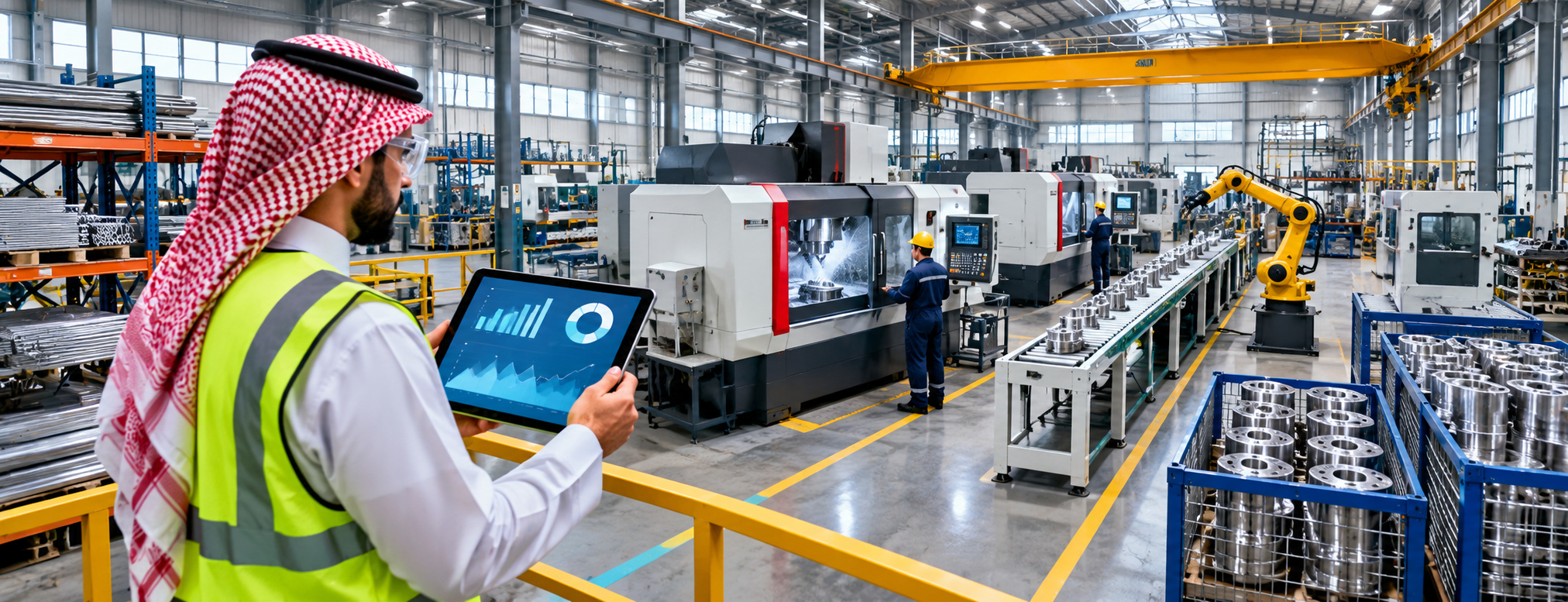
The best accounting software for factories connects raw material consumption, labor costs and manufacturing overhead to actual production quantities, then transfers the results to inventory, accounts and financial reports. If a factory purchases raw materials and sells finished products without knowing the cost of producing each unit, it cannot accurately determine its profit margin or assess the viability of a new order, even if supplier and customer accounts are well organized.
A factory's requirements differ from those of a trading business that buys and resells finished products. Materials may pass through several stages, some may remain in production at month-end, and the process may generate waste or quantities that fail to meet specifications. The system should therefore be selected according to the production model and costing method, not merely the number of invoices. This guide explains the criteria for choosing a suitable system for Saudi factories and how to test the production and accounting cycle before signing a contract.
What Is the Difference Between Commercial Accounting Software and Manufacturing ERP?
In a trading company, the cost of goods generally begins with the purchase price and the costs of bringing inventory to its present location and condition under the accounting policy. A factory adds the cost of converting materials into saleable products. This includes direct labor and systematic allocation of manufacturing overhead, in accordance with the inventory valuation rules applicable to the business. International Accounting Standard 2 explains the principles of inventory cost and conversion costs for entities applying this standard.
Manufacturing ERP, or enterprise resource planning, aims to connect departmental data rather than having each department maintain separate figures. In an integrated model, a production request begins with an approved plan or order, materials are issued to the stages, completed quantities are recorded, and accounting tracks the impact of these movements on inventory value and production cost. For general criteria, see the ERP selection guide. Having ERP in a product's name does not mean it covers all these functions; they must be tested in practice.
| Aspect | Commercial accounting software | Integrated manufacturing system |
|---|---|---|
| Inventory | Purchased items ready for sale | Raw materials, work in progress and finished goods |
| Cost | Purchase cost of goods | Materials, labor and manufacturing overhead |
| Documents | Purchasing, sales, transfers and inventory counts | Production issues, work orders and finished goods receipts |
| Reports | Item and sales profitability | Batch costs, variances and production stages |
Simple accounting software may suffice for a business performing limited assembly and documenting production costs outside the system. However, as work orders increase or products and raw materials multiply, repeated entry and reconciliation between files become potential sources of error. Nezami accounting solutions present a model combining accounting, inventory, purchasing and sales; specialized production functions must be evaluated according to your factory's needs.
How Do You Identify the Production Model the System Must Support?
Make-to-Order Production
In a factory producing doors or metal parts to customer dimensions and specifications, materials and working hours vary by order. The accountant needs a reference connecting issued material costs and operating wages to each order so that actual execution costs can be compared with the price accepted by the customer. Sales staff need to know the difference between the accepted quotation, the quantity delivered and the amount still uncollected.
Do not create a new product record for every order if the product allows specifications to be recorded on the production order. Agree with the technical manager on the level of detail useful for reporting: do you need tracking by unit, batch or project? Detail should support useful decisions rather than create unnecessary data entry burdens.
Batch Production
Some factories produce a specified quantity of a product in one operation before moving to another batch. Each batch's results may differ from the plan because of material quality, waste rates or operating settings. The system must therefore compare target quantities with actual accepted quantities and document the materials consumed in each batch.
The factory should record nonconforming quantities separately from saleable products and agree on how to handle rework and recoverable scrap. Mixing all outputs into one balance may cause employees to sell unsuitable quantities or accountants to report an understated unit cost.
Continuous or Multi-Stage Production
In some factories, production lines operate continuously and materials may pass through several stages before becoming finished products. This model requires tracking completed work and work in progress, and an appropriate method of allocating costs between units or stages. Ask the provider about the limits of its production model; support for simple production orders does not automatically establish suitability for complex continuous production.
Book a demonstration and share your production flowchart, including waste, rework and work-in-progress inventory, to evaluate actual suitability.
Key Features of Production Management and Manufacturing Accounting Software
Defining Materials and Bills of Materials
A bill of materials specifies the planned quantities of materials needed for a unit or batch. Manufacturing a chair, for example, may require wood, screws and finishing materials, and the factory may use semi-finished components produced in an earlier stage. Standardizing this list gives purchasing staff a basis for estimating requirements and helps accountants compare planned and actual consumption.
Define a clear base unit of measure for each material. If purchases are in kilograms and issues in grams, configure and review the conversion factor instead of relying on mental arithmetic for every transaction. If a product requires variable quantities depending on size, record the variation in a way that can be explained later. Do not use a single bill of materials for products with different specifications if doing so hides significant cost differences.
When changing material types or specifications, retain a reference to the change and its effective date. Recalculating old order costs using a new bill of materials without supporting documentation may distort comparisons between periods. Ask about bill-of-materials version management or an alternative way to preserve original order details.
Purchasing, Receiving and Storing Raw Materials
A production line may stop because a low-value material fails to arrive on time, even when most materials are available. Purchasing managers therefore need to know expected demand, quantities available for use, quantities reserved for other orders and outstanding purchase orders. Goods undergoing inspection should not automatically be considered available for production unless approved by the quality manager.
Upon receipt, match quantities, units and specifications against the purchase order. Record quantity discrepancies and supplier returns, and review how transport and direct raw material purchasing costs affect valuation under the business's policy. The DigitalPlus procurement system advertises purchasing, returns and price analysis functions; these can be used to evaluate supply prices while considering specifications, quality and lead times, not price alone.
Calculate purchasing requirements from the production plan after deducting available inventory and quantities due to arrive in time. Do not rely solely on total inventory; quantities may be in another warehouse, allocated to an earlier order or unsuitable for use. Reordering decisions must reflect actual production dates and the supplier's ability to deliver.
Work Orders, Material Issues and Receipts
A production order is a reference that brings together the target product, required quantity and production schedule. Warehouse staff need a document recording what was issued to the order, while production staff need to record completed quantities and unused materials returned. At the end of the process, determine the saleable finished quantity and any units requiring rework or rejection.
Ask whether partial receipts are possible before an order is completed and how the remaining balance is handled. In an order for one thousand units, six hundred may be completed before month-end while four hundred remain in production. If the software treats the order as complete upon the first receipt, balances will not reflect reality. Closing the order must not conceal unreconciled materials or unrecorded outputs.
Cost Centers and Overhead
Some costs can be assigned directly to a product, such as identifiable raw materials or worker hours recorded against a specific order. Other costs, such as factory electricity or depreciation of shared equipment, require an appropriate allocation basis reflecting resource usage. Allocation methods vary according to the nature of costs and activities and may use machine hours, labor hours or production units when appropriate.
Do not confuse manufacturing overhead with administrative and selling expenses. Rent for a product showroom is not necessarily part of unit manufacturing cost. Review the policy with a qualified accountant and ask the system to show which accounts were included in production cost and how each product's share was calculated.
Accounting Example: Calculating Actual Production Cost
Suppose a small factory produces a batch of one thousand saleable units during a specified period. This hypothetical example assumes no work in progress at the beginning or end of the batch and no abnormal waste. All amounts are in Saudi riyals and exclude recoverable tax.
| Cost element | Amount |
|---|---|
| Direct raw materials | 18,000 |
| Direct labor | 6,000 |
| Allocated manufacturing overhead | 4,000 |
| Total batch cost | 28,000 |
| Finished units | 1,000 |
| Average unit cost | 28 |
If the factory sells 700 units at 45 riyals per unit before tax, sales total 31,500 riyals and the cost of units sold is 19,600 riyals. Gross profit is 11,900 riyals, while the cost of 300 unsold units remains in inventory at 8,400 riyals under the example's assumptions. Do not deduct the entire batch cost from period sales if not all units have been sold, as this distorts profit and inventory.
How Does Waste Affect Cost?
If the planned quantity is one thousand units but only 950 acceptable units are produced, do not assume that the entire difference can be charged to inventory without analysis. Distinguish normal waste associated with the process from abnormal waste requiring appropriate accounting treatment under the applicable standard and policy.
A simplified educational example: if the total cost eligible for allocation to 950 units is 28,000 riyals, the average unit cost is approximately 29.47 riyals. However, if that amount includes abnormal waste that should not be included in inventory, exclude that cost from the allocable amount. Ask the system and accountant to explain differences rather than applying automatic division in every case.
Comparing Planned and Actual Costs
If management plans to use materials costing 17,000 riyals but actual cost reaches 18,000 riyals, the increase of one thousand riyals requires explanation. It may result from higher purchase prices, greater consumption or differences in batch specifications. For a fair comparison, account for differences between actual and planned production quantities before judging departmental efficiency.
It is useful to separate material price and usage variances when suitable data are available. Do not hold production managers responsible for supplier price increases when consumption matches the plan, and do not regard purchasing cheaper materials as a success if their quality increases waste. Variance reports should connect operational causes to financial results.
Managing Work in Progress at Month-End
Many factories have materials that have been issued but not yet converted into finished products. The balance of these stages is called work in progress. Valuing it requires knowledge of completed work and associated costs, not merely the number of open orders. One order may be nearly complete while another has only recently started.
Set the accounting cutoff date, identify open production orders and reconcile issued, returned and received quantities. Then follow the approved method for valuing unfinished work. If the factory uses different conversion stages, it may need to estimate completion for each cost element according to the appropriate accounting system. Do not assume that one completion percentage always applies to both materials and labor.
Also review types of warehouse inventory counts. During counting, distinguish unissued raw materials, work in progress and finished products. If raw materials have left the warehouse for production, they should not appear both in available raw material balances and in work-in-progress costs. Tracking locations and documents helps prevent duplication; consult the multi-warehouse inventory management guide to understand controls for inventory across multiple locations.

Reports the System Should Provide to Factory Managers
A report showing total sales and purchases is insufficient. Managers need indicators connecting factory resources with the results achieved. Start with these reports according to data availability and the nature of the process:
• Unit or production order cost: to compare product costs and pricing decisions.
• Actual versus planned consumption: to identify waste or specification changes.
• Open orders and finished products: to estimate remaining work and delivery dates.
• Raw material inventory by item and location: to prevent stoppages or excessive purchasing.
• Product and customer profitability: to distinguish orders with good margins from those that drain resources.
• Supplier obligations and customer collections: to balance the cash cycle with production requirements.
It is important to identify who reviews each report and what decision is made based on it. A daily waste report is more useful to production managers than an aggregate report issued a month later, while accountants focus on reconciling balances, valuing inventory and explaining differences at closing. Further knowledge is available in the accounting guides on the DigitalPlus blog.
E-Invoicing and Linking Factory Sales to Accounting
Factories often deal with companies and distributors and may also sell directly to individuals. The system must distinguish internal production documents from electronic invoices documenting sales transactions when issuance conditions are met. A production order or raw material issue note does not replace the required customer invoice.
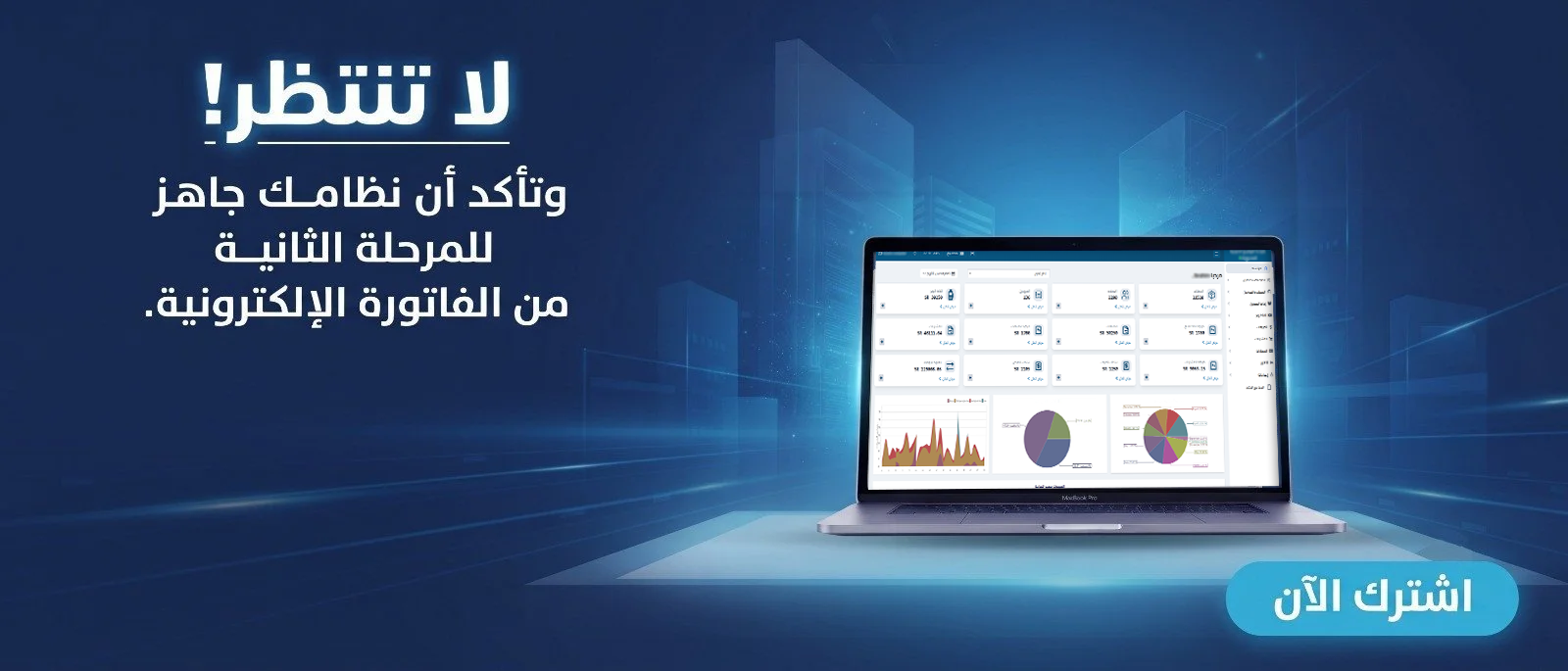
The Zakat, Tax and Customs Authority explains that e-invoicing is implemented in two phases and that integration is gradually applied to designated groups. Verify your business's obligation status with the authority and test invoice types appropriate to your transactions and related notes for returns or adjustments under the rules. Do not rely on an invoice printed from a sales order if it fails to meet regulatory requirements.
The sales system connects inventory and accounting according to information published on Nezami's website. During factory trials, verify that delivered quantities flow into cost of sales consistently with finished goods valuation and that invoice values can be reconciled with customer balances and collections.
Steps for Implementing the System in a Factory
Preparing Data and Policies Before Migration
Gather the chart of accounts, raw material and product lists, units of measure, warehouses and existing production orders. Review duplicates and unexplained negative balances, and identify products whose specifications have changed. Agree with the accountant on inventory valuation, cost allocation and production order closing methods, then document work procedures clearly.
Do not migrate aggregate inventory data without separating raw materials, work in progress and finished products. If some customer or supplier balances are old, reconcile them against documents before uploading. Opening data form the basis of subsequent reports; errors may require adjustments that are difficult to explain after operations begin.
Limited Pilot Run
Choose a product representing routine work and another involving a special case, such as a unit-of-measure change or partial batch production. Record raw material purchases and issues, finished product receipts and sales of part of the output. Compare unit cost, inventory value and gross profit against expected manual calculations. Then test material or product returns and closing before a production order is completed.
Involve the purchasing manager, warehouse keeper, production supervisor and accountant in testing, since each owns part of the cycle. Do not leave the system solely in the accountant's hands when figures depend on data generated by other departments. Define permissions so employees cannot issue materials or approve adjustments outside their responsibilities.
Start a DigitalPlus trial and request testing of production scenarios before migrating actual balances.
Organize your factory accounting and inventory with DigitalPlus
Explore the system and request a demonstration to test production and costing according to your factory’s needs.
How Do You Compare System Costs Before Subscribing?
The article on accounting software prices in Saudi Arabia explains general cost considerations. A small factory producing a few items may have different needs from a factory with multiple lines and locations. Calculate annual software costs plus configuration, training, data migration, hardware and necessary integrations. Ask whether costs change when users, warehouses or production functions are added, and whether the agreement covers support for closing procedures and operational problems.
Request a proposal detailing functions actually available in the package rather than relying on the phrase integrated system. If you need specialized functions such as production capacity planning, machine scheduling or complex batch tracking, verify them independently. A financial system may be suitable with a specialized integration, but define each component's responsibilities and how data are reconciled between them.
You can review Nezami packages and compare factory requirements with their included features, requesting a written proposal for the required capabilities.
The Role of DigitalPlus in Factory Management
Nezami dedicates a page to the factory and manufacturing sector and describes the solution as combining production, inventory and costs. Its homepage also explains that DigitalPlus connects sales, purchasing and accounting with inventory. These areas are relevant to a factory's financial and operational foundation.
However, suitability depends on details: does the factory require multi-stage work orders? Does it want actual costs per batch or manufacturing overhead allocated in a particular way? Does it require special tracking of production materials or outputs? Raise these questions in a consultation with the Nezami team and demonstrate how they are handled in the software version you will use, without assuming all manufacturing models are covered in the same way.
To review reports for multiple production locations, see measuring branch profitability to identify appropriate indicators when separating the results of production lines and branches.
Frequently Asked Questions
What is the difference between manufacturing accounting and commercial company accounting?
Manufacturing accounting measures the cost of converting raw materials into products, including appropriate manufacturing costs, and tracks work in progress. Trading companies generally deal with purchased goods ready for resale.
Does every factory need an integrated ERP system?
This depends on business size and the number of production stages and departments. Simpler solutions may suffice for limited production, while more complex factories benefit from data integration and control over work orders and costs.
How does a factory calculate the cost of a produced unit?
Costs eligible for allocation under the accounting policy are accumulated and then allocated to units or orders appropriately. Work in progress, waste and the manufacturing overhead allocation basis are taken into account.
Does product cost include all factory expenses?
Not necessarily. Accounting policy distinguishes production costs eligible for inclusion in inventory from expenses charged to the period. Review the classification with the accountant.
How do I know whether manufacturing accounting software is suitable before buying it?
Test a real production cycle including purchasing and issuing raw materials, receiving finished products, selling part of them and closing a partial order, then reconcile reports with the expected cost calculation.
Can factory accounting be linked to e-invoicing?
Yes, in principle, through an invoicing solution that meets the requirements applicable to the business. Verify invoice type, required integration and processing statuses rather than relying solely on a print template.
Conclusion
Choosing the best accounting software for factories starts with understanding how the factory produces goods, then identifying the data needed to calculate unit cost and track raw materials, products and work in progress. Test accounting results from actual transactions and review the reports management needs rather than relying on a general feature list. Keep pricing, costing and quality decisions distinct while connecting them through reconcilable data.
If you are looking for a solution combining financial functions, inventory and sales while allowing production requirements to be evaluated, you can register to explore the system and discuss how to apply DigitalPlus to your factory's model.
Start managing your business with DigitalPlus
Explore Nezami solutions for managing sales, inventory, and accounting on one platform.
- ✓ Sales and POS management
- ✓ Inventory tracking
- ✓ Link operations to accounting