Cloud Accounting Software: The Comprehensive Guide to Managing Your Organization's Finances Remotely
Cloud Accounting Software: The Comprehensive Guide to Managing Your Organization's Finances Remotely
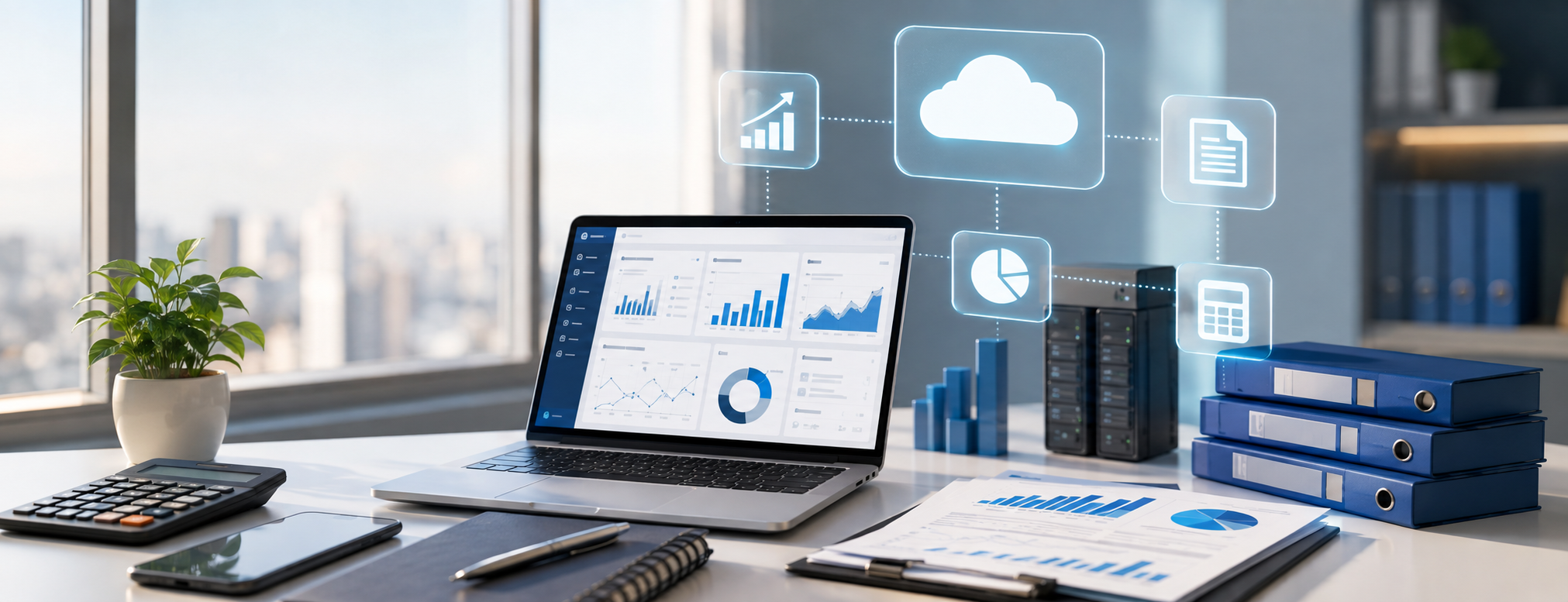
In today's business world, financial control for companies is no longer confined to a desktop computer or scattered across separate Excel spreadsheets. Cloud accounting applications have provided business owners and accountants with the ability to track sales and purchases, manage expenses, and monitor supplier and customer balances, as well as inventory taking and extracting financial statements through a centralized platform accessible based on the permissions assigned to each individual.
The paramount importance of these internet-based systems becomes evident when the organization has multiple branches, when performing financial work remotely, when top management desires real-time monitoring of financial performance, or even to reduce errors resulting from repeated manual entry between cashier devices, inventory management, and financial entries.
However, the decision to choose the appropriate platform should not be based solely on the cloud connectivity feature; it requires a comprehensive assessment of accounting efficiency, security level, interface smoothness, availability of electronic invoicing, analytics quality, in addition to the level of technical support and the system's flexibility for future expansions. In this article, we will explain the operating mechanism of these cloud systems, highlight their most prominent benefits, and the differences that distinguish them from traditional software, along with the criteria for choosing the most suitable solution for your project.
What is Meant by Online Accounting Software?
A cloud accounting system is an advanced digital tool concerned with documenting transactions, facilitating invoice issuance, tracking sales revenues and purchase expenses, controlling inventory, and settling customer and supplier accounts, all of which is done via web browsers or compatible devices.
This type of system is called by various names, most notably:
- Cloud accounting platforms.
- Online financial management applications.
- Cloud-based accounting systems.
- Cloud electronic invoicing software.
- Digital accounts and inventory integration systems.
- Comprehensive web-based accounting software.
All data is stored within a secure cloud environment overseen by the service provider, rather than being piled up on the company's local computers. The user can access the system using their credentials and according to the level of permissions granted to them.
For example, upon completing a sale and issuing an invoice, the software — based on the activated settings — immediately updates revenue figures, settles the customer's account, calculates due taxes, and updates inventory balances and related data, eliminating the phenomenon of manual duplication in entering the same transaction.
It is worth noting that just because the application works online does not necessarily make it capable of handling all accounting tasks or suitable for all types of projects; there are platforms exclusively concerned with invoicing, while other software provides an integrated environment to connect all departments with each other.
How the Cloud Accounting System Works
Any online financial application relies on a centralized database that receives inputs from authorized staff members, to later process them according to pre-programmed accounting and tax rules.
The operating cycle usually proceeds according to the following sequence:
- Setting up the organization's profile and inserting its core information.
- Building the chart of accounts.
- Defining tax rates, traded currencies, and cost centers.
- Registering customer and supplier data.
- Defining goods and services and linking them to warehouses.
- Creating team accounts and setting their permissions.
- Inserting opening balances for the project.
- Documenting daily financial transactions.
- Reviewing analytics and conducting periodic financial closing.
Once a sales representative prints a new invoice, its impact is directly reflected in the financial department's records without the need to transfer papers or send side files. Similarly, when a purchase order is recorded, supplier balances, quantities of received goods, and inventory cost are automatically updated.
This interconnection contributes to reducing the discrepancy between sales and inventory schedules, but it does not prevent errors caused by inaccurate human entry or incorrect accounting routing, which necessitates specialized financial supervision and effective employee training.
Key Differences Between Cloud Accounting Systems and Traditional Software
The fundamental difference is that cloud solutions operate via the web and can be accessed from anywhere, whereas desktop solutions are exclusively installed on the company's local computers or servers.
| Point of Comparison | Online Accounting System | Desktop Accounting Software |
|---|---|---|
| Operating Mechanism | Via web browsers or smart apps | Through a local server or computer |
| Remote Access | Possible based on granted permissions | Requires complex network settings |
| Data Storage Locations | On secure cloud servers | On the company's private devices |
| Updates Management | Done automatically by the service provider | Requires manual maintenance and installation |
| Branch Management | High flexibility in centralized connectivity | Requires infrastructure and costly connectivity |
| Backup Storage | According to the system provider's strategy | Falls on the company's team |
| Pricing Model | Periodic fees (monthly or annual) | Purchasing licenses and hardware equipment |
| Offline Operation | Depending on each system's capabilities | Flexible local operation is available |
| Increasing Staff Numbers | Easily via package upgrades | Requires additional licenses and maintenance |
| Help & Support | Mostly provided online | On-site or remotely |
There is no one-size-fits-all template for all commercial activities. Cloud software is the best option for organizations with scattered branches or those requiring external supervision, while desktop systems remain a haven for facilities relying on closed networks or facing difficulties with internet connectivity.
Key Features of Online Accounting Systems
Cloud financial software offers a bundle of features that facilitate the organization of administrative and financial affairs, provided these functions align with the organization's size and field of work.
Tracking Financial Operations from Any Location
The cloud environment grants authorized team members the flexibility to view records whether from the company's headquarters, homes, or while traveling, via internet-connected smart devices.
The benefits of this feature are evident for:
- Owners wishing to monitor their business remotely.
- Financial managers overseeing multiple branches.
- Store and warehouse managers.
- Organizations relying on remote work.
- Projects requiring immediate approvals and authorizations.
However, remote accessibility does not mean unleashing permissions for everyone; visibility should be restricted to what serves each employee's work, such as allowing a sales employee to issue invoices while preventing them from changing tax settings or viewing profits.
Organizing Entries and Accounting Ledgers
A comprehensive system must include the necessary tools to direct the financial cycle efficiently, and its role is not limited merely to printing invoices.
Among the most prominent tasks required to be available are:
- Organized chart of accounts.
- Automated and manual accounting entries.
- Receipt and payment vouchers.
- General and subsidiary ledgers.
- Managing debit and credit balances.
- Tracking revenues and expenses.
- Analytical cost centers.
- Bank reconciliations.
- Accurate trial balance.
- Comprehensive income statements.
- Financial positions.
- Extracting supplier and customer statements of account.
- Accurate closing of time periods.
The financial analyst is expected to be able to dive into the details of the numbers starting from the report down to the original document, ensuring review accuracy and rectifying deviations.
Creating Invoices and Monitoring Payments
Electronic invoicing platforms contribute to organizing sales operations, sharing documents, and tracking collections, with precise monitoring of received amounts and arrears.
Among the vital features in this regard are:
- Professionally designing quotations.
- Converting quotes into approved invoices with a click of a button.
- Organizing cash and credit sales.
- Managing discount rates and various taxes.
- Multiple payment options and methods.
- Scheduling payments and tracking partial settlements.
- Documenting return operations.
- Issuing credit and debit accounting notes.
- Accurate scheduling of dues.
- Aging of debts assessment.
- Issuing detailed statements for customers.
This follow-up allows for a clear distinction between paper sales and actual cash flows, as high sales figures do not always mean an abundance of liquidity to cover operating expenses.
Controlling Sales and Purchases Transactions
The cloud application must accommodate the sales and purchase cycles from the starting point up to financial posting.
The sales stages include:
- Providing quotations.
- Issuing supply orders.
- Generating invoices.
- Applying discounts.
- Processing returns.
- Monitoring collections.
- Settling customer accounts.
- Analyzing sales performance.
As for the purchases cycle, it includes:
- Raising requisition requests.
- Approving purchase orders.
- Recording supplier invoices.
- Receiving goods.
- Managing purchase returns.
- Scheduling supplier payments.
- Analyzing expenses and purchases.
- Controlling financial obligations.
This integration makes it easier to know dues, supports comparison operations between suppliers, and you can rely on the Procurement System to reduce random expenses and control item costs.
Controlling Warehouses and Items
Commercial organizations cannot do without systems that combine accounts and warehouses to link daily transactions with the actual inventory status.
Among the pivotal functions in this framework are:
- Setting up goods and services cards.
- Supporting barcodes and multiple units.
- Monitoring available balances.
- Operating and managing scattered warehouses.
- Managing inventory transfers.
- Inventory taking and adjusting discrepancies.
- Processing damages and spoilage.
- Tracking product costs.
- Triggering warnings when quantities are low.
- Recording returns.
- Tracking expiration dates and serial numbers.
Isolating warehouse management from financial entries can lead to a clear discrepancy in numbers and inventory valuation. To address this, one can resort to the Distribution System or the Point of Sale System which achieves full interconnection between buying, selling, and accounting inventory.

Managing Supplier and Customer Files
The digital application makes it easy to open an independent record for each party, including invoices, financial transactions, and debt balances.
Analytics are used to extract data such as:
- Customers defaulting on payments.
- Cash flows expected to be collected.
- Suppliers whose dues must be paid.
- Volume of transactions with each supplier.
- Credit facilities.
- Collection cycle rates.
- Pending invoices.
- List of top customers.
- Key suppliers.
When company operations require organizing continuous communication and follow-up lines, the Digital Sender can be employed to ensure staying effectively in touch and organizing after-sales services.
Extracting Instant Financial Statements and Reports
Analytical dashboards allow entrepreneurs a deeper understanding of real profits, instead of just monitoring bank balances to evaluate project success.
The most prominent analytical statements include:
- Income and profit statements.
- Trial balances.
- Financial position.
- Sales statistics.
- Purchases statistics.
- Cash flow movement.
- Customer statements.
- Supplier claims.
- Item movement reports.
- Profit margin for each product.
- Branch productivity.
- Allocation of expenses to cost centers.
However, the accuracy of real-time reports depends on entering all transactions correctly and conducting bank and inventory reconciliations regularly, before building decisions on them. To start monitoring these indicators, you can Register and get the trial period to evaluate financial performance clearly.
Distributing Permissions and Organizing Users
Permission control is a fundamental pillar, especially in organizations where sales, warehouse, and management departments share the same system.
Functional roles can be designed such as:
- General Supervisor.
- Financial Manager.
- Specialized Accountant.
- Branch Manager.
- Sales Representative.
- Warehouse Keeper.
- Cashier.
- Auditor.
Tasks should be restricted regarding:
- Reviewing figures and indicators.
- Recording new transactions.
- Editing previous invoices.
- Accepting returns.
- Destroying or deleting records.
- Manipulating prices.
- Issuing discounts.
- Downloading reports.
- Viewing profit margins.
- Adjusting tax rates and accounts.
Strictness in setting permissions protects the organization from random errors and enhances data security.
Managing Multiple Branches Centralizedly
Companies can manage all their sales units through a single cloud infrastructure, with the ability to extract separate or consolidated results.
It is recommended to choose applications that support:
- Recording each branch's data separately.
- Defining specific warehouses for branches.
- Linking employees to their workplaces.
- Separating revenues and expenses for each location.
- Inventory transfers.
- Customizing price quotations.
- Closing cashier daily logs.
- Measuring the profitability of independent locations.
- Issuing consolidated budgets.
This importance becomes clearly evident when opening new outlets, to avoid data scattering in separate databases that hinder comprehensive oversight.
Integration with Parallel Platforms and Systems
Software integration contributes to saving the hassle of repeated manual entry.
Many entities resort to integrating with:
- Point of sale devices.
- Digital sales websites.
- Modern commerce applications.
- Electronic payment gateways.
- Customer relationship management software.
- Human resources systems.
- Delivery and representative software.
- Logistics supply companies.
- Business intelligence tools.
- SMS services.
However, merely having an integration icon is not enough; one must practically ensure the following points:
- The type of exchanged information.
- Synchronization timing (instant or scheduled).
- Procedures for dealing with connection loss.
- Mechanism to prevent transaction duplication.
- Additional fees required for integration.
- The party responsible for providing technical support.
- Accuracy of transferring returns and tax impacts.
What is the Utmost Importance of Cloud Accounting Systems?
The power of digital applications lies in creating a unified financial reference, saving effort, reducing errors, and improving the quality of oversight and reporting efficiency.
Among their most valuable fruits are:
- Dispensing with scattered ledgers and papers.
- Ultra-fast speed in issuing invoices.
- Accuracy in tracking debts.
- Organizing files of dealers and suppliers.
- Automatic warehouse updates with every sales transaction.
- Complete clarity in calculating profits.
- Tracking branch performance remotely.
- Minimizing manual entries.
- Securing data thanks to precise permissions.
- Fast generation of statements and statistics.
- Permanent and historical archiving of transactions.
- Enhancing transparency between management and the financial department.
- Ease of accommodating organizational growth.
As a practical example, an entrepreneur might be deceived by the abundance of bank liquidity, forgetting their massive obligations for taxes and salaries. Here, the role of financial systems emerges in presenting a comprehensive picture of obligations and expenses rather than superficially relying on the available balance.
Are Cloud Accounting Systems Suitable for Small Businesses?
Definitely, these applications are considered the optimal choice for startups whenever they are presented with flexible interfaces free of excessive complexity, and at costs that align with the team size and sales movement.
They achieve high added value for:
- Startup businesses and projects.
- Small and medium entities.
- Markets and retail showrooms.
- Consulting and service offices.
- Building and construction establishments.
- Goods distributors.
- Cafes and food providers.
- Organizations with multiple geographical locations.
- Digital commerce platforms.
A startup project may not need complex Enterprise Resource Planning (ERP) systems, and can start with a simplified platform for expenses and invoices, to later add warehouse and point-of-sale tools according to its growth pace.
Check out the Packages and Pricing designed specifically to support rising projects, which provide a fully Arabic interface and disciplined financial statements supporting work across various devices.
The Cloud Accounting System and E-Invoicing Requirements
It has become mandatory that the financial management tools used locally comply with approved electronic invoicing regulations, and the matter is not limited to simply exporting the invoice as a PDF file.
Legislative authorities have set precise standards for generating, saving, and transmitting financial documents in an organized and protected digital format.
The organization must ensure the system fulfills the following elements:
- Standard tax invoices.
- Simplified tax invoices.
- Accurate application of the Value Added Tax (VAT) rate.
- Covering all mandatory fields.
- Electronic credit and debit notes.
- Archiving documents and records according to regulations.
- Generating Quick Response (QR) codes.
- Advanced security controls.
- Actual integration with government platforms for the linking phase.
- Covering points of sale in all branches.
Any organization can choose the system it desires provided it meets these technical requirements, and you can now Register and get the trial period to test the system's performance, or visit Book your consultation to ensure the platform's compliance with advanced linkage phase standards.
Does the Cloud Application Eliminate the Need to Hire an Accountant?
Owners can send invoices, track expenses, and manage customers autonomously, and we provide you the opportunity to Register and get the trial period to start working immediately. However, these software do not replace a specialized accountant in designing financial policies, making reconciliations, analyzing statements, and preparing declarations.
The system is capable of:
- Performing calculations accurately.
- Recording entries based on configuration.
- Categorizing numbers.
- Extracting ready-made analytics.
- Archiving attached files.
- Activating automated alerts.
Ready to try the system?
Start your free trial or talk to the sales team to help you choose the right solution.
As for the accountant, their tasks focus on:
- Structuring the chart of accounts optimally.
- Determining the accounting path for each transaction.
- Auditing the created entries.
- Performing bank reconciliations.
- Valuing and pricing inventory.
- Reading and deducing indicators.
- Completing periodic closings.
- Auditing tax deductions.
- Reconciling ending balances.
- Translating figures for decision-makers.
Using an inappropriate account or neglecting to record certain expenses will lead to misleading results, thus efficiency is achieved by combining advanced technological tools with professional accounting review.
Practical Steps to Choose the Optimal Accounting Platform
The journey to acquiring the right tool starts with an accurate understanding of the company's needs, moving through testing operational functions, and reviewing security procedures, costs, and prospects for future expansion.
Determine the Nature of Your Business
Ask the following questions:
- Does the organization offer tangible goods or consultations?
- Do you manage warehouses and merchandise?
- Does your work require cashier devices?
- Do you manage multiple geographical locations?
- Do credit or cash transactions predominate?
- Does the nature of the work require tracking contracting and projects?
- Are there production or item assembly operations?
- Does the service require organizing appointments and bookings?
- Do you rely on e-commerce channels?
For example, advertising agencies' requirements differ from a supermarket's needs. Cafes can explore the Restaurant and Cafe Management System, while the hospitality sector is advised to check the specialized Hotel System instead of relying on general applications not designed to serve them.
Identify Essential Functions
Sort required tasks into three categories:
- Indispensable functions from day one.
- Tools you will need with expansion plans.
- Non-urgent technical luxuries.
Inevitable requirements in most sectors include:
- Invoicing.
- Expense tracking.
- Customer and supplier management.
- Sales and purchase control.
- Warehouse control.
- Permission restrictions.
- Periodic analytics.
- Tax compliance.
- Cashier and points of sale.
- Multiple locations.
Test Ease of Use
Let your employees try performing live tasks within the system, such as:
- Issuing a tax invoice.
- Proving receipt of a partial financial payment.
- Recording new supplies.
- Proving merchandise return.
- Entering petty cash expenses.
- Defining a new product in the warehouse.
- Executing a simple inventory count.
- Printing a statement of account for a supplier.
- Generating a profit and loss balance.
- Assigning a new employee and customizing their screens.
If these basics take a long time or appear with confusing interfaces, your team will face obstacles after officially adopting the system.
Review Reports
Ensure the flexibility of analytical dashboards and their sortability by:
- Time ranges.
- Sales locations.
- Employee names.
- Customer list.
- Supplier list.
- Product names.
- Expense centers.
- Payment methods.
- Storage locations.
Don't just browse promotional images, but print the reports yourself using the test numbers you entered to assure quality.
Examine Security Policy
Inquire from the developing company about:
- Geographical locations for database hosting.
- Information encryption protocols.
- Backup saving mechanisms.
- Backup frequency rates.
- Retention period for backup records.
- Flexibility of recovery steps during emergencies.
- Two-factor authentication login options.
- Monitoring employee activity logs.
- Complex password requirements.
- Ability to download your databases locally.
- Controls applied upon contract termination.
Verify Scalability
Adding a new warehouse or an extra employee should not force you to look for another application.
Therefore, make sure of:
- Maximum limits for employee accounts.
- Capacity for branches and warehouses.
- Capabilities for managing holding or sister companies.
- Flexibility to upgrade to higher packages.
- Activating advanced tools later.
- Fees incurred for expansions.
- Platform stability as invoice numbers multiply.
- Smooth data transition to larger versions.
Calculate Total Cost
Go beyond superficial subscription fees, and list all financial obligations:
- Main subscription value.
- Cost of additional licenses for employees.
- Fees for activating new geographical locations.
- Additional warehouse management fees.
- Point of sale costs.
- Onboarding and training packages.
- Legacy data migration fees.
- Technical support packages costs.
- Custom modification fees.
- Payments specific to software integration.
- Upgrade costs.
- Hardware accessories prices if any.
Some applications seem economical initially, only for their bills to inflate as soon as you attempt to activate basic features.
Pitfalls to Avoid When Acquiring Financial Applications
Among the most prominent failures organizations fall into:
- Biasing towards a certain system just because of its low cost.
- Investing in massive software that exceeds the project's size.
- Confusing simple invoicing applications with standard accounting software.
- Excluding the financial analyst's opinion when making the decision.
- Skipping the field trial step.
- Overlooking hidden costs like branch and training fees.
- Disregarding data saving and protection policies.
- Granting absolute permissions to all team members.
- Neglecting to check tools for exporting information externally.
- Blindly trusting external integration icons without real testing.
- Migrating old records without prior cleanup.
- Ignoring the importance of training the work staff.
- Launching directly without reconciling closing balances of previous years.
- System non-compliance with local tax regulations.
- Absence of alternative scenarios for network outage situations.
It is of utmost importance not to dump old ledgers with their errors and duplications into the new system; the digital transformation phase is the perfect moment to purify records, merge duplicate accounts, and adjust debts.
Ready to try the system?
Start your free trial or talk to the sales team to help you choose the right solution.
Integrated Cloud Accounting Systems
Modern technical platforms offer a wide spectrum of solutions to support companies, including the specialized Contracting System, and general cloud solutions that combine accounting, cashier, warehouses, and customer service management with extreme flexibility.
Among the prominent advantages in these technical solutions:
- Comprehensive cloud financial platform.
- Professional documentation and reconciliation of entries.
- Fully Arabic user interface.
- Organized digital saving of documents.
- Generating approved electronic invoices.
- Guiding analytics and statements.
- Interactive charts and dashboards.
- Access via computers, phones, and tablets.
- Packages designed for the rising projects sector.
- Independent software for managing distribution, hospitality, and retail.
The project owner can browse Packages and Pricing to choose the most suitable software structure, whether limited to financial affairs, or extended to include cashier and warehouses, or tailored for a specific sector.
For companies relying heavily on moving goods and barcode scanning, it is advised to resort to tools that combine cashier and financial inventory together to support sales policies, item returns, tracking payment methods, suppliers, and accurately analyzing profitability indicators.
In general, there is no single platform that can be labeled "perfect" for everyone. Some solutions smoothly serve a small store looking for a quick invoicing tool, while a supermarket needs terminal devices and fast barcodes, and a cafe requires tools to arrange tables, manage the prep kitchen, and delivery orders.
Hence stems the importance of putting the system under actual testing by entering transactions similar to your daily routine, including:
- Printing an instantly collected invoice.
- Creating a credit sales entry.
- Recording payment of an advance deposit.
- Documenting the refund of a sold product.
- Entering purchases from a supplier.
- Transferring goods between two warehouses.
- Issuing a cashier's end-of-shift report.
- Extracting claims for a certain customer.
- Reviewing the comprehensive income statement.
- Evaluating the sales of a specific branch.
Go ahead now to Register and get the trial period to test the real tools, or head to Book your consultation to speak with our consultants and clarify your technical and operational needs and the size of your organization.
Compare available solutions, then request a demo session to apply your daily tasks to the system before making a final decision upon which the future of your business depends.
Common FAQs About Cloud Accounting Systems
What is an internet-based accounting application?
It is an integrated digital environment that operates via the internet, facilitating the documentation of transactions, organizing sales invoices and purchase expenses, saving records of related parties, and extracting final statements from any platform with access permissions.
Is there a discrepancy between online systems and cloud software?
Mostly, both terms refer to the same concept; which are platforms hosted by remote servers and accessed via a web browser. However, it is advisable to check the hosting technologies and backup methods of the respective service provider.
What is the most prominent financial platform in the Saudi market?
The best option is always what aligns with your project's size and goals, complies with local tax declaration standards, supports the Arabic interface, and offers account organization features, analytical dashboards, and employee permissions in addition to point of sale management. There is no single option that dominates the arena for all activities.
Do these applications suit medium and small projects?
Absolutely, provided you acquire a simplified version that meets current needs and is upgradable in the future. Small entities usually make do with invoicing, expenses, and general reports, whereas shops need to activate storage modules and points of sale.
Can I manage my business via mobile phone?
Most modern platforms provide dedicated mobile apps or responsive web interfaces for small screens. Despite that, it's preferable to test vital tasks from the phone before relying on it, as some programs are limited to viewing reports without the ability to enter new entries.
Does work stop when internet connection is lost?
The cloud infrastructure requires continuous connectivity to ensure instant data synchronization. In contrast, some applications offer a limited mode for offline use, provided the data is uploaded later; this is a feature that varies from one platform to another and must be scrutinized beforehand.
How safe are my financial records on the cloud?
The security level is tied to the developer's competence and internal protection policies in your organization. One must ensure strong encryption, regular backups, and setting employee permissions, along with the necessity of applying a strict password policy and preventing account sharing among team members.
Does the financial system cancel the financial analyst's role?
Not at all. The system is a tool for fast entry, sorting, and automatic table generation, but the accountant is the one who sets financial routing, audits balances, closes periods, translates numbers, and ensures the organization's compliance with tax laws.
Are electronic invoicing requirements officially supported?
Many applications support this, but you must make certain that the version you will purchase is fully compatible with the phase your organization is subject to according to local regulations, without settling for promotional slogans.
Can the accounting platform be integrated with a cashier?
Yes, many cloud solution providers allow integration with cashiers, or the cashier is available as a built-in tool within the original system. This interconnection ensures every sales transaction is posted to financial and warehouse ledgers automatically.
How can I monitor more than one sales location?
This is achieved if the software is engineered to support multiple branches, giving you the ability to isolate expenses and sales of each location individually, as well as extracting comprehensive results for the organization as a whole.
Can I import my old balances from Excel files?
Advanced systems provide tools to upload old lists such as supplier and goods data in Excel or CSV formats. But the most important step lies in purifying those files and deleting duplicate data before merging them, and then matching accounts later.
What is the way to ensure the system succeeds with my work mechanism?
List your daily operational steps, and execute them step by step within the available free account. If you can complete sales, purchase, and inventory cycles smoothly, and find necessary support and expandability, then the platform is suitable for your company.
What are the differences between invoicing software and accounting systems?
Invoicing platforms are basically dedicated to creating and printing invoices and tracking their collection, whereas accounting systems dive deeply into building a chart of accounts, proving entries and reconciliations, and issuing complex financial statements.
Is there a chance to test the platform before paying fees?
Certainly, we provide you the opportunity to Register and get the trial period to explore the application's efficiency, and you can also communicate with the commercial department to explain the system's dimensions and choose the package suitable for your needs.
Final Word
Adopting an effective cloud accounting system puts in your hands a centralized tool to unify number spreadsheets, invoices, supplier records, and warehouses, and presents decision-makers with a clear map of profit trajectory, liquidity status, and productivity of scattered locations.
However, the system's strength is not confined to its cloud nature, but extends to include the clarity of its interfaces, its professionalism in accounting routing, its commitment to official invoicing controls, the strength of its security, the flexibility of its reporting permissions, and the integration of its services and continuous technical support.
Start by outlining current problems and listing your urgent requirements, then put platforms under real field testing. Don't let your decision be held hostage by cheap pricing or an abundance of icons, but look for total cost and the degree of harmony with your organization's structure and future. Afterward, request detailed presentations and test the application on your own data to be fully assured before final adoption.
Start managing your business with complete flexibility
Try Aamal Raqamia for free. Start issuing your ZATCA-compliant electronic invoices within minutes.