Accounting Systems Classifications
Accounting Systems Classifications: The Comprehensive Guide to Choosing the Optimal Software for Your Company in Saudi Arabia
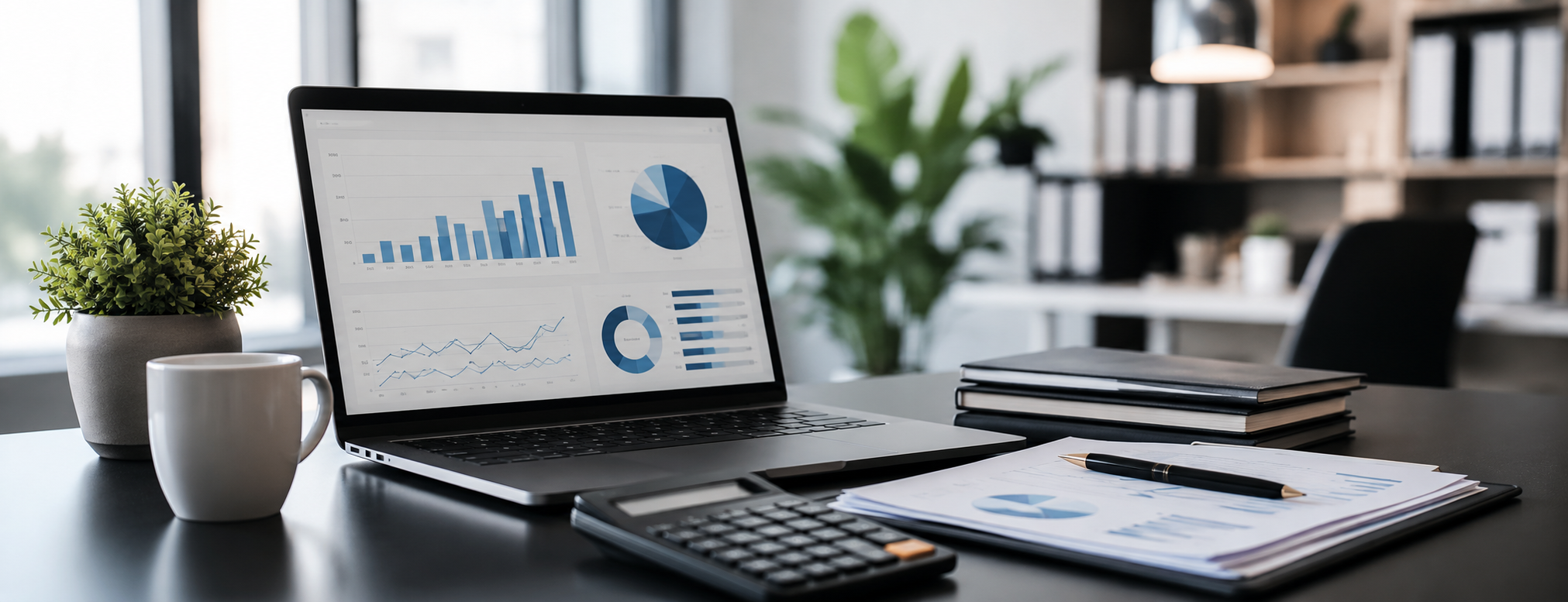
Relying on a financial application that does not align with the nature of your business can create crises that go beyond tracking invoices and daily entries; such as discrepancies in warehouse inventory, delays in preparing financial statements, complications in linking branches, and forcing the team to enter data repeatedly, in addition to obscuring the accurate view of actual profit margins. For this reason, the decision to acquire software should not be limited to its cost or the abundance of its features alone, but must stem from the facility's needs, the volume of its business, the number of beneficiary employees, and the necessity of integrating financial operations with sales and warehouse management.
In this comprehensive article, we will shed light on the categories of accounting software based on the tasks they perform, the scale of business operations, the commercial sector, and the system's operating mechanism, in addition to clarifying the fundamental differences between traditional accounting applications, Enterprise Resource Planning (ERP) systems, and cashier and Point of Sale (POS) software.
We will also provide you with a set of realistic criteria to guide you toward the most appropriate choice, whether you manage a small solo business, a digital store, a cafe, or a growing enterprise with multiple branches.
What is meant by accounting systems?
Accounting applications are technical solutions specifically designed to record, process, and classify various financial transactions, such as buying and selling operations, incoming and outgoing cash flows, and managing customer and supplier balances. These platforms contribute to efficiently preparing financial statements, monitoring cash liquidity, inventorying items, and calculating tax liabilities, eliminating the need for old manual methods or scattered Excel spreadsheets.
The concept of accounting applications in brief: It is a suite of digital tools that transforms daily random financial procedures into an organized database, easy to audit, analyze, and invest its outputs in sound administrative guidance.
Before diving into the details of these systems, it is necessary to distinguish between three basic levels:
- A simplified application whose role is limited to recording expenses and incomes and issuing invoices.
- A professional software that integrates financial operations with sales systems, warehouse control, or employee payroll.
- A comprehensive centralized platform that connects financial management with the rest of the company's departments, such as procurement, human resources, sales, and support services.
How accounting systems work:
The first step in these programs starts with establishing the chart of accounts, followed by inserting data of commercial partners, products, and opening balances, then comes the stage of recording daily transactions. The system automatically distributes the impact of each transaction on the relevant accounts, revealing the final outcome in the form of professional statements such as the statement of financial position, profit account, and tax and warehouse reports.
Benefits of using accounting software
The most prominent advantages of accounting systems lie in their superior ability to transform scattered financial activities into a series of interconnected and organized procedures, reducing the effort and time spent on financial preparation, and providing management with a clearer view of data, which supports making accurate decisions that accelerate the company's growth pace.
Key features offered by accounting systems:
- Reducing human errors: The system performs calculations and automatic posting according to programmed foundations, eliminating errors that occur in manual work.
- Saving time and effort: The system allows you to extract the invoice, reduce the quantity from the warehouse, and create the accounting entry in a single synchronized step.
- Organizing partner accounts: The platform helps monitor customer debts, dues owed to suppliers, and overdue payment dates.
- Preparing financial statements: Provides quick access to income and expense reports, profit and loss rates, and liquidity movement.
- Warehouse control: Some platforms provide real-time linking between issued invoices and remaining quantities of goods.
- Customizing access permissions: The ability to set a specific level of access for each employee in line with their job duties.
- Centralized database: Avoiding information fragmentation between warehouse, sales, and finance departments by integrating them into a single digital environment.
- Enhancing control level: These solutions provide accurate tracking logs showing the identity of the user who created or modified any transaction and the time it occurred.
- Supporting top management: The extracted reports support the evaluation process to identify best-selling products, top-performing branches, and items requiring cost rationalization.
- Scalability: Advanced systems allow integrating additional branches or new users in line with business growth plans.
The importance of using these programs clearly emerges with the inflation of daily transaction volume or multiple sales outlets. In these stages, relying on paper ledgers or fragmented software becomes a major reason for conflicting numbers and delayed financial results.
Discover now: The Packages and Prices available for our software in Saudi Arabia
How did accounting systems evolve from paper to the tech cloud?
Accounting practices started in their early days relying on paper records where transactions were recorded manually. The process of reviewing and auditing numbers and extracting statements took a very long time, and detecting and processing errors was highly complex.
With the computer boom, local applications emerged that were installed on a single computer or a narrow internal network. This step contributed to speeding up operations and saving data digitally, but they remained confined to their location, and the requirements for updating and protecting them were costly, time-consuming, and carried risks of information loss.
This was followed by the emergence of modern solutions like a ready-made procurement system and sales software that provided pre-configured templates for managing invoices and commercial operations. These solutions gave small and medium enterprise owners the opportunity to organize their business without bearing the costs of programming a custom system from scratch.
With the internet revolution and cloud services, you can now register and get a trial period for cloud systems that allow you to manage your business via a web browser or smart app from anywhere and at any time. This technology also facilitated continuous updates, data sharing among branches, and secure backup assurance.
Today, the role of accounting software has gone beyond merely recording entries to become a comprehensive ecosystem, like an integrated distribution system that merges goods movement, invoicing, and analytical financial data, becoming the central nerve for managing any facility.
What are the most prominent classifications of accounting systems?
Accounting applications are classified based on four main axes: the functional role they provide, the company size, the target sector, and the system's operating mechanism.
The most common classifications include:
- Basic accounting applications.
- Enterprise Resource Planning (ERP) platforms.
- Payroll processing systems.
- Warehouse inventory control software.
- Invoicing solutions.
- Systems designed for small and medium enterprises.
- Applications tailored for specific commercial sectors.
- Software installed on local computers (desktop).
- Online cloud accounting platforms.
- Cashier apps integrated with accounts and warehouses.
It is not required for a company to purchase a separate application for each department; in fact, most modern solutions offer full integration of these modules into a single unified environment.
Discover the features through the restaurant and cafe management system as a distinguished cloud solution.
Classification of accounting software based on tasks
Applications branch according to their function into standard systems, integrated platforms, and software dedicated to payroll or invoicing management. Your choice depends on the nature of procedures you wish to computerize within your organization.
Comprehensive Accounting Systems (General Accounting Software)
This type specializes in managing core financial tasks, such as setting up the chart of accounts, recording daily transactions, tracking customer and supplier records, issuing receipt and payment vouchers, and preparing final financial statements.
This classification suits entities that focus on organizing their financial side without expanding into granular operational details. It usually includes:
- General ledger.
- Analytical cost centers.
- Debt and liability management.
- Payment and collection receipts.
- Bank reconciliations.
- Profit and financial position statements.
- Tax returns.
It is important to ensure the software's ability to align the chart of accounts with the nature of your business, as some platforms provide a fixed structure that may not suit complex operations or multiple branches.
Enterprise Resource Planning Systems (ERP Software)
An ERP system is a comprehensive software environment that integrates financial management with all operational arms such as procurement, warehousing, human resources, and customer relationship management.
Once a purchase is recorded in this system, its impact is instantly reflected by increasing the warehouse balance, proving the supplier's entitlement, calculating tax, and posting the financial entry, thereby eliminating duplicate data entry.
ERP platforms are the ideal choice for companies that:
- Have complex branches and departments.
- Seek to establish a centralized database.
- Rely on a chain of approvals and sequential workflows.
- Aspire to manage their financial and operational facets from a single screen.
- Require advanced and detailed reports and permissions.
However, this system might be an overkill option for small businesses, given its need for more time in configuration and staff training.
Employee Payroll Management Software (Payroll Software)
These are applications designed to calculate regular salaries, along with accompanying allowances, deductions, financial advances, and end-of-service benefits processing.
This module contributes to controlling personnel affairs through:
- Archiving employee files.
- Setting the basic salary and assigned allowances.
- Monitoring deductions and advances.
- Integration with biometric devices to calculate attendance and absence.
- Preparing monthly payroll slips.
- Posting payroll impact as financial entries.
- Extracting analytical reports for labor costs.
It is always preferable to integrate this module within the overall accounting system to ensure automated posting of payroll expenses instead of manual entry.
Warehouse Control Applications (Inventory Management Software)
This system tracks the path of goods from the moment they are received, through storage, up to their sale or transfer between company outlets.
Its most prominent tools include:
- Establishing item cards and their units.
- Verifying stock balances.
- Tracking receiving, issuing, and return operations.
- Managing warehouse transfers.
- Periodic inventory processes and discrepancies settlement.
- Issuing alerts upon reaching the reorder point.
- Analyzing slow and fast-moving goods tracking.
- Automatically calculating the cost of goods sold.
This tool is an urgent necessity for restaurants, stores, and factories, to link sales with instant stock updates and avoid discrepancies between records and reality.
Invoicing Systems (Invoicing Software)
These are simplified applications tailored for printing invoices, tracking their payment, and keeping quick records of customers and services provided.
These applications suit freelancers and micro-services that do not require major accounting complexities.
It is worth noting that invoicing software does not replace an integrated accounting system, as it may lack double-entry bookkeeping and balance sheets.
In the Kingdom of Saudi Arabia, complete assurance of the application's compliance with approved e-invoicing regulations must be verified. Therefore, we advise you to take the initiative and book your free consultation to ensure you pick compliant software.
A quick comparison of application types by task
| Category | Main Task | Target Audience | Key Checking Criterion |
|---|---|---|---|
| Comprehensive Accounting | Establishing entries and extracting final statements | Service and general trading sectors | Customizability of the chart of accounts |
| ERP Platforms | Unifying financial management with operational processes | Large entities and multiple branches | Ease of implementation and configuration level |
| Payroll Management | Processing salaries and monthly payrolls | Labor-intensive businesses | Effective integration with biometric devices |
| Inventory Control | Monitoring goods, their quantities, and costs | Factories, restaurants, and shops | Valuation methods and multi-warehouse support |
| Invoicing Software | Generating invoices and monitoring collection | Freelancers and micro-projects | Compliance with tax regulations |
Ready to try the system?
Start your free trial or talk to our sales team to help you choose the right solution.
Categorization of accounting software by workload size
The optimal software choice varies based on transaction density, number of users, and sales outlets. What works for a startup may not fulfill the aspirations of a massive commercial entity requiring intertwined operational paths.
Systems dedicated to micro-businesses and individual projects
This category is often satisfied with a direct system for recording expenses and revenues and generating electronic invoices.
Key requirements for this segment:
- Speed in setup and operation.
- Uncomplicated user interface.
- Simplified financial statements.
- Tools to extract and export information.
- Economical and suitable subscription fees.
- Full compliance with Zakat and Tax requirements.
- Flexibility to upgrade to higher packages upon expansion.
Cashier (POS) applications for shops and small businesses
Retail outlets such as pharmacies and cafes require a quick solution that links the cashier interface with inventory and financial management.
Attributes of an effective system for this sector:
- Smooth and highly responsive sales interface.
- Integration with barcode scanners and printers.
- Managing promotional offers and discounts.
- Processing various payment methods.
- Automatically deducting sold items from the warehouse.
- Facilitating return policies.
- Issuing accurate reports for shift closing.
- Managing sellers' permissions.
- Instant integration with accounting records.
Digital Pro, through its Point of Sale system, offers a unified experience integrating the cashier interface with accounts, sparing the merchant the issue of separating direct sales data from the financial aspect.
Accounting systems oriented towards Small and Medium Enterprises (SMEs)
The needs of this category go beyond simple invoicing, extending to controlling general accounts, the procurement cycle, warehouse inventory, and evaluating partner performance.
Key selection determinants:
- Providing access levels for multiple employees.
- Ability to integrate and manage different branches.
- Relying on accurate cost centers.
- Professional financial and administrative dashboards.
- Compatibility with POS software when necessary.
- Flexibility to add advanced features.
- Availability of training and technical support services.
- Easy remote access to the cloud system.
- Supporting mandatory e-invoicing requirements.
You can review the packages and pricing tailored for this category to ensure your investment goes into a system capable of accommodating your future growth.
Advanced software for large entities (ERP Platforms)
Large companies demand a comprehensive ERP environment that controls thousands of operations and manages a massive organizational structure across multiple branches.
Core requirements include:
- Managing sister companies or independent branches.
- Consolidating budgets and extracting unified financial statements.
- Electronic workflows for approvals and authorizations.
- Managing estimated budgets.
- Tracking and depreciating fixed assets.
- Controlling supply chains and tenders.
- Comprehensive human resource management.
- Planning and tracking major projects.
- Advanced Application Programming Interfaces (APIs).
- High-level cybersecurity and auditing tools.
Government sector and non-profit organization applications
These entities have a special financial nature related to managing funding, initiatives, and endowments.
Key requirements include:
- Allocating accounts to specific programs and projects.
- Monitoring grants, gifts, and donations.
- Preparing and monitoring annual budgets.
- Controlling expenses according to specific allocations.
- Isolating conditionally restricted revenues from others.
- Governance of purchasing operations.
- Extracting reports serving transparency and oversight requirements.
Software comparison table by facility size
| Facility Size | Typical Optimal Choice | Functional Tasks | Complexity Level |
|---|---|---|---|
| Emerging Solo Business | Direct invoicing or accounting app | Incomes, expenses, smart invoices | Very Simple |
| Retail showroom or cafe | Financially integrated cashier app | Fast sales, warehouse, POS | Limited to Average |
| Growing or Medium Company | Modern accounting platform (Cloud) | Overall operations, supply chains, reporting | Moderate |
| Massive and multi-branch entity | Integrated ERP system | Integrating all departments of the entity | Highly Professional |
| Charitable or government institution | Customized solution or tailored ERP | Budget oversight and expenditure governance | Advanced |
Types of accounting software by commercial sector
It is imperative to choose a tool that matches business dynamics; restaurant management differs radically from the needs of hotels or construction and contracting companies.
Key specialized solutions:
- Retail Sector: Inherently requires a Point of Sale System for barcode scanning, offer processing, and till management.
- Cafes and Restaurants: Demand strict oversight of kitchens, recipes, and waste calculation, and can rely on the Restaurant and Cafe Management System that combines sales speed with cost accuracy.
- Hospitality Sector: Focuses on accommodation, commissions, and taxes, where the role of a comprehensive Hotel System becomes prominent.
- Service Companies: Focus on sending quotations, recurring financial claims, and communicating with clients.
- Construction Sector: Requires analytical capabilities for cost centers and submitting payment certificates through a specialized Contracting System.
- Industrial Activity: Needs processing of raw materials, manufacturing formulas, and work orders to determine the final product cost.
- Supply and Logistics: Requires directing sales representatives and delivery routes through an effective Distribution System.
- Customer Service Sectors: Benefit from linking marketing operations with direct messages and alerts via the Digital Sender to boost customer loyalty.
Digital Pro always strives to design specialized work environments that touch the reality of every business, instead of forcing the client into generic templates that fail to capture the details of their daily work.
Classification of accounting systems by operating mechanism
Technically, these systems are divided into traditional platforms installed on company computers, and modern cloud platforms hosting their data on secure online servers.
Local (Desktop) Applications
These are programs requiring direct installation on the facility's devices or internal servers to operate within a specific scope.
Main advantages:
- Independent operation within the internal network.
- Complete ownership of servers and databases.
- Suitable for areas with poor internet infrastructure.
- Ability to establish internal security policies.
However, they face some hurdles, including:
- Exorbitant costs for server setup and maintenance.
- The institution bears the responsibility of taking backups.
- Obstacles in accessing the system from outside the office premises.
- Double effort in installing periodic upgrades.
- Difficulty in technical linkage upon opening new branches.
Advanced Cloud Applications
These are flexible digital ecosystems managed and hosted by specialized cloud service providers, utilized via web browsers.
They boast the following features:
- Freedom of access to the platform from any device and location.
- Receiving technical upgrades instantly and centrally.
- Linking distant branches and unifying their data in seconds.
- Eliminating local servers and their costs.
- Reviewing financial analytics via smartphones.
- Flexibility to expand and add new users.
- Ensuring business continuity via automated backups.
Registering and getting the trial period for Digital Pro's cloud system allows you to oversee your business and manage your sales and inventory via a secure interactive interface that supports all retail and restaurant sectors.
Comparison between local and cloud systems
| Comparison Criterion | Local (Desktop) Systems | Cloud Applications |
|---|---|---|
| Hosting Environment | Institution's computers and servers | Secure online servers |
| Remote usage flexibility | Requires complex network configurations | Always accessible whenever connectivity is available |
| Installing Updates | Executed manually via technical support | Automatic and free by the provider |
| Technical Burden | Requires purchasing and setting up specific hardware | Requires only a web browser |
| Data protection and loss | Falls under the company's responsibility | Guaranteed via automated backups |
| Integrating additional branches | Entails costly network linkage | Done instantly at the click of a button |
| Network Outage | Work continues internally | Work stops unless offline mode is supported |
| Cost Structure | Massive capital expenditures for setup | Affordable monthly or annual subscriptions |
Ready to try the system?
Start your free trial or talk to our sales team to help you choose the right solution.
What's the ideal choice: Desktop or Cloud systems?
There is no textbook answer that suits everyone; cloud software is the best haven for enterprises wishing to manage remotely and evade server costs, while desktop applications impose themselves as an essential solution for environments lacking network stability or imposing strict security constraints.
You can determine your path by answering these questions:
- Do you need to follow workflows from your phone or while traveling?
- Are your teams distributed across distant geographical locations and branches?
- Do you have technical staff to maintain server hardware?
- How strong and stable is the internet connection in your sales outlets?
- Do your procedures necessitate the ability to work in an isolated off-grid environment?
- How do you prefer handling backup procedures?
- Can you guarantee fluid data migration in the future?
- What is the total allocated budget (including updates and maintenance)?
- How will permissions be distributed and modifications tracked?
- What is the quality of post-sale technical support?
The majority of small and medium businesses find maximum flexibility in the packages and pricing for cloud software, while entities with operational specifics may lean toward hybrid or local solutions.
Future trends of accounting systems
The pace is accelerating in the software world towards absolute reliance on artificial intelligence and instant integration, transforming the software from an observation tool for past events into a financial advisor predicting opportunities and warning of risks.
These trends emerge in:
- Automated Entries: Routing invoices and matching bank accounts with minimal human intervention.
- AI Analysis: Detecting suspicious transactions and forecasting future liquidity standing.
- Real-time Indicators: Reviewing profit margins and goods quantities with instantaneous accuracy without waiting for month-end closing.
- Application Programming Interfaces (APIs): Direct synchronization with e-commerce platforms, banks, and payment gateways.
- Mobile Management: Empowering leadership to process approvals and inspect performance via smartphone screens.
- Impenetrable Security Barriers: Activating two-factor authentication protocols and strictly encrypting databases.
- Specialized Sector Applications: Designing interfaces perfectly aligned with the nature of sectors like contracting and hospitality.
- Financial Foresight: Leveraging past sales trends to plan for upcoming inventory.
- Regulatory Compliance: Automatic updates for tax regulations and official invoicing requirements.
Despite this stunning technical evolution, human presence via a professional accountant will remain imperative to draft financial policies, analyze indicators, and ensure correct accounting guidance.
Pros and Cons of Accounting Software
Financial applications form a strong lever to organize and secure workflow, but they can turn into an operational burden if poorly chosen or haphazardly implemented without preparation and training.
Primary Gains:
- Executing commercial transactions at lightning speed.
- Reducing the volume of error-prone manual inputs.
- Archiving documents and digitally linking them to entries.
- Accurate monitoring of customer claims and supplier debts.
- Readiness of financial statements at any time.
- Seamless linkage between warehouse movement and invoices.
- Tightening the grip on employee permissions.
- Extracting analytical results for each branch or product individually.
- Flexibility in absorbing new company structures.
- Streamlined data flow between enterprise departments.
Major Obstacles and Challenges:
- Financial burdens for subscriptions and initial setup.
- Necessity to train the staff to use the platform.
- Distorted reports if inaccurate data is inputted.
- Reluctance of some employees to embrace digital transformation.
- Complexities in transferring records from a legacy software environment.
- Service reliance on the efficiency and continuity of the technology provider.
- Inevitability of monitoring security policies and updating permissions.
- Paying fees for complex features the facility may not currently need.
- The cost of programming additional APIs with other systems.
- Risk of total paralysis if contingency plans and backups are unavailable.
Hence, your criterion shouldn't be searching for the "biggest software", but finding the "most harmonious system" with your sales cycle, financial solvency, and future ambitions.
Differences between Accounting Systems and ERP Platforms
A standard accounting software focuses on documenting the financial impact and extracting clear balance sheets, whereas the ERP environment melds accounting operations within a broad operational and administrative crucible in a unified system.
For illustration: a regular financial program can book a supplier invoice to create an accrual entry, while an ERP system manages a comprehensive journey starting from a purchase requisition, through the procurement committee, then warehouse inspection, up to creating the supplier invoice and issuing the payment order, all reflected automatically in accounting.
Modern financial software might contain features for warehouses and payrolls, blurring the line with ERP, but the difference lies in the comprehensiveness of procedures and the depth of interconnection between all circles of the enterprise.
Table detailing differences between Accounting Application and ERP System
| Comparison Aspect | Dedicated Accounting App | Enterprise Resource Planning System - ERP |
|---|---|---|
| Primary Goal | Financial oversight and bookkeeping | Computerizing and controlling all institutional activities |
| Feature Comprehensiveness | Invoicing, entries, and financial results | Finance, supply chains, HR, and production |
| Primary Users | Financial manager and accounting staff | All employees across different departments |
| Internal Integration | Relies on partial external linking | Organic interconnectivity among all modules |
| Implementation Duration | Fast and requires no massive effort | Requires studying and engineering procedures first |
| Software Flexibility | Fixed features or minor tweaks | High customization to fit the company's style |
| Total Cost | Economical and affordable for projects | High and considered a long-term investment |
| Most Suitable For | Stores and offices with a simplified cycle | Complex industrial and commercial entities |
| Expansion Options | Upgrading packages to increase users | Integrating factories, branches, and entire departments |
| Extracted Analytics | Purely financial statistics | Comprehensive KPIs for all departments |
An institution might find its salvation in a balanced option combining advanced accounting, sales management, and POS, acting as a middle ground sparing ERP costs without sacrificing operational connectivity.
Differences between an Accounting System and POS Application
An accounting system specializes in proving financial results and tracking cash trails, whereas the cashier (POS) application shoulders the responsibility of executing direct sales deals to the public.
The POS screen calculates product values, applies offers, determines the payment method, then prints the receipt and deducts the inventory balance. Conversely, the financial system receives this data to create the revenue entry, calculate tax, and prove the treasury or bank account movement to complete the documentary cycle.
Table showing differences between a Financial System and POS App
| Comparison Aspect | Accounting Software | POS System |
|---|---|---|
| Responsible for Operation | Accounting and Management Team | Retail Seller or Cashier Clerk |
| Nature of Work | Processing revenues and expenses | Issuing sales invoices to customers |
| Goods Processing | Tracking the cost and financial value of inventory | Automatically reducing quantities with each sale |
| Invoicing Type | Deferred sales invoices, and supplier purchases | Direct and cash sales receipts |
| System Priority | Ensuring accuracy of entries and posting | Speed of execution to avoid delaying the customer |
| Required Equipment | Personal computers or laptops | POS hardware, receipt printers, barcode scanners |
| Report Outputs | Balance sheets and income statements | Daily cash movement and till reconciliation |
| How to Maximize Benefit | Through automated synchronization with POS | By integrating its sales into the central accounts |
Administrative crises worsen when the cashier app operates in isolation from financial management, forcing employees to manually match sales, taxes, and warehouse inventory daily. Therefore, it is always advised to rely on a connected ecosystem, especially in retail and food sectors.
Get the: Integrated Restaurant and Cafe Management System to connect your branches to your management.
The most suitable software for SMEs
The ideal solution for this sector is an application that efficiently meets current requirements, and possesses sufficient flexibility to absorb future expansions without drowning employees in unnecessary complex details.
It is recommended to include the following features:
- Comprehensive accounting entries.
- Processing purchase and sales orders.
- Tracking customer and supplier files.
- Accurate warehouse management if necessary.
- Issuing approved electronic invoices.
- Transparent financial analytics.
- Distributing costs to specialized centers.
- Supporting a team with varying permissions.
- Accommodating multiple branches and warehouses.
- Securing data with backups.
- Effective customer service and training.
- Tools for extracting and exporting files.
- Capabilities for technical linkage with other applications.
Before committing to a subscription, write down the challenges hindering your workflow, and virtually test the system by simulating a full workday; starting from issuing a price quote, going through returning goods and receiving a financial payment, all the way to reviewing a profitability report.
Discover the available options via: Contracting System to support your small and medium projects.
The best POS system for stores and shops
The secret lies in choosing a POS application that connects directly to goods and accounts management, and issues instant electronic invoices, granting the merchant the ability to monitor branch performance and cash movement from a unified control screen.
Look for the following core features:
- Interactive interface ensuring fast customer service.
- Compatibility with barcode scanners.
- Ease of categorizing products and their sales units.
- Customizing flexible pricing policies.
- Managing discounts and loyalty programs.
- Smooth processing of exchanges and returns.
- Handing over and receiving financial trusts for shifts.
- Supporting multiple payment channels.
- Sending warnings when goods are nearly depleted.
- Transferring goods flexibly between branches.
- Assistant tools for conducting actual inventory.
- Matching accounts for suppliers and debtors.
- Displaying reports for fast-moving and most profitable goods.
- Full compatibility to run on various devices.
- Compliance with approved invoicing conditions.
- Defining tasks and permissions for each employee.
Note that the nature of the shop imposes special requirements; pharmacies care about expiry dates and batch numbers, fashion stores focus on size and color variations, whereas groceries require an ultra-fast interface, and service centers focus on appointment scheduling.
Learn about the Point of Sale system or book your free consultation so we can answer all your inquiries.
Motivations for choosing Digital Pro as an accounting solution
AamalSoft (Digital Pro) places in your hands an ecosystem of financial and administrative software dedicated to covering the requirements of diverse sectors, including cashier interfaces, warehouse control, hospitality tech, restaurants, support services, and smart dashboards. This diversity gives your company a chance to rely on a tool that simulates your work environment rather than adapting to rigid traditional software.
Compliance with ZATCA Requirements
Digital Pro system's adherence to the Authority's requirements means its complete capability to issue electronic invoices that comply with official conditions and mandatory phases.
It is crucial to realize that the application's technical infrastructure alignment with regulations is the decisive criterion for its adoption, regardless of whether the provider's name is in the guiding lists displaying companies that passed initial qualification requirements.
Accordingly, your management must practically verify the software version's suitability for the tax phase applied to you, and test the integration and invoice issuance mechanism before official launch.
Expert staff to support you in setup and data entry
Having specialized experts during the launch period helps avoid setup errors, especially during the stage of building the chart of accounts, registering item and customer lists, and recording opening balances.
It is recommended to cover the following steps during preparation:
- Carefully studying operational requirements.
- Selecting the software modules to be activated.
- Structuring accounts and tax percentages.
- Registering employees and granting them permissions.
- Archiving goods and commercial partner files.
- Importing initial financial values.
- Training the team to complete daily tasks.
- Testing the extraction of reports and documents.
- Auditing the final outputs before approval.
Also, it is not recommended to pull all old data as is; rather, it is better to filter and refine customer and item lists before migrating them to the modern system.
Smooth and clear user experience
Ease of use is not limited to colors and design; it means empowering the employee to execute transactions with clear, intuitive steps.
We at AamalSoft (Digital Pro) care about providing highly clear digital work environments, where the cloud platform is characterized by its flexibility to run on different screens, allowing the manager to monitor investments from anywhere as long as there is internet.
When inspecting the system, try real tasks such as:
- Printing a sales invoice.
- Creating a card for a new customer.
- Proving a payment voucher.
- Processing a returned item.
- Displaying a detailed statement for a supplier account.
- Investigating warehouse balances.
- Modifying the access level for an employee.
- Generating a sales volume report.
If these simple tasks drain too many clicks, know that the system will become a fertile ground for employee errors despite its many capabilities.
Security guarantees and information immunity
Data security does not solely depend on password strength; it involves encryption policies, permission protocols, automated backup mechanisms, monitoring logs, and disaster recovery plans.
We at Digital Pro ensure the application of strict encryption standards to protect your information, in addition to employing highly reliable secure cloud solutions.
Ensure you have answers to the following questions before signing:
- Where do the databases reside?
- What is the schedule for taking backups?
- How long are these backups kept?
- What is the mechanism for restoring lost data?
- How are password rules regulated?
- Is Two-Factor Authentication (2FA) available?
- Can modifications be tracked per user?
- Who holds the permission to extract data from the system?
- How do I get my information upon contract cancellation?
- What is the system's operational strategy during emergencies?
Transparency in fees and support quality
Never evaluate software solely based on initial subscription fees. Some programs seem cheap at first glance, but impose hefty costs when adding a new employee, requesting extra training, or requiring API linkage.
Calculate the true cost including:
- Basic subscription fees.
- Additional user licenses.
- Fees for linking branches and POS.
- Training and orientation sessions.
- Efforts to import old data.
- Post-sale technical support services.
- Future system updates.
- Programming connections with external systems (APIs).
- Custom developments for your business.
- Advanced backup service.
- Purchasing servers in case you choose the desktop system.
The Digital Pro team provides you with the ability to review packages and prices with high transparency to help you evaluate the software in alignment with your facility's needs and aspirations.
Explore the available packages, then book your consultation to preview a practical application of your company's processes before committing to a subscription.
Top FAQs about Accounting Systems
What are the types of accounting software?
- Financial application categories include the following:
- Basic accounting software
- E-invoicing platforms
- Payroll processing systems
- Warehouse control applications
- Cashier and POS software
- Internet-connected cloud systems
- Locally installed software
- Enterprise Resource Planning (ERP) networks.
The choice is settled based on project magnitude and department complexity.
What is the most famous accounting software?
There is a wide array of international and local options in the market, but software popularity does not guarantee its suitability for your business. The real benchmark is how well the application aligns with local invoicing regulations, provides technical support in your language, and accommodates the workflow of your store or company.
What is accounting software?
They are software technologies aimed at automating and documenting purchasing and selling transactions, money flows, and customer and supplier balances, ultimately translating into analytical financial dashboards that steer management decisions.
What is the difference between cloud and desktop accounting software?
Desktop software is planted within the company's own servers, while a cloud system resides on secure internet servers, allowing easy access from anywhere. This difference entails variations in responsibilities regarding protection, updates, and bearing infrastructure costs.
What is the best accounting software for companies?
The best software accurately mimics the enterprise's operations, accommodates its expansion plans, and allows customization of its reports and permissions to sync seamlessly with sales and warehouse circles. There is no single software that universally fits all types of companies.
Is POS software considered accounting software?
A cashier app is not regarded as a full-fledged financial manager, but it represents the front-end sales interface of your accounting system. It finalizes the sale, for the accounting system to later take its turn in formulating entries and directing the financial impact to the final statements.
Is off-the-shelf accounting software suitable for small companies?
Absolutely, pre-built applications are an ideal solution for startups if they serve the purpose and support future upgrades. However, one must verify the absence of crippling conditions that restrict staff expansion or opening new branches.
How do I know if the accounting software suits my business?
Draw a clear map of your business cycle, employee count, and inventory and pricing mechanisms. Then subject the software to a practical test simulating issuing invoices and generating profit reports to compare against your real needs.
Can I test the system before subscribing?
Certainly, via the Digital Pro platform, you can register and get the trial period to discuss with our technical crew and assess the application's efficiency. During this phase, it is vital to focus on testing sales procedures, adjusting permissions, and extracting financial results, rather than getting dazzled by the outer look.
What is the difference between accounting software and ERP systems?
Financial software suffices with managing and routing transactions towards accounting statements, whereas an ERP system goes further to merge this financial impact with other management tracks like sales and HR in a single, indivisible operational environment.
Conclusion
The classifications of financial applications diversify and branch out, ranging from invoicing systems, payroll processing, and POS software, to cloud or local solutions, up to complex ERP networks. The success of your choice is not measured by the sheer volume of software features, but by their deep alignment with your workflows, their level of compliance with official legislations, and management's oversight aspirations.
Begin your journey by outlining the operational challenges hindering your progress, and compare available solutions based on interface simplicity, security robustness, technical support availability, and total cost calculation. Do not hesitate to request a live trial that simulates your actual work environment.
Adopting the correct technology from day one will guarantee accurate accounts, tight control over goods, and transparent performance indicators, sparing you future suffering in replacing systems and migrating databases. To ensure you land on the ideal choice, request a trial demo now and explore the system's performance with data simulating your actual business before final adoption.
Start managing your business with full flexibility
Try AamalSoft for free. Start issuing your ZATCA-compliant e-invoices within minutes.