
Point-of-Sale Software Supporting E-Invoicing in Saudi Arabia
Point-of-Sale Software Supporting E-Invoicing in Saudi Arabia
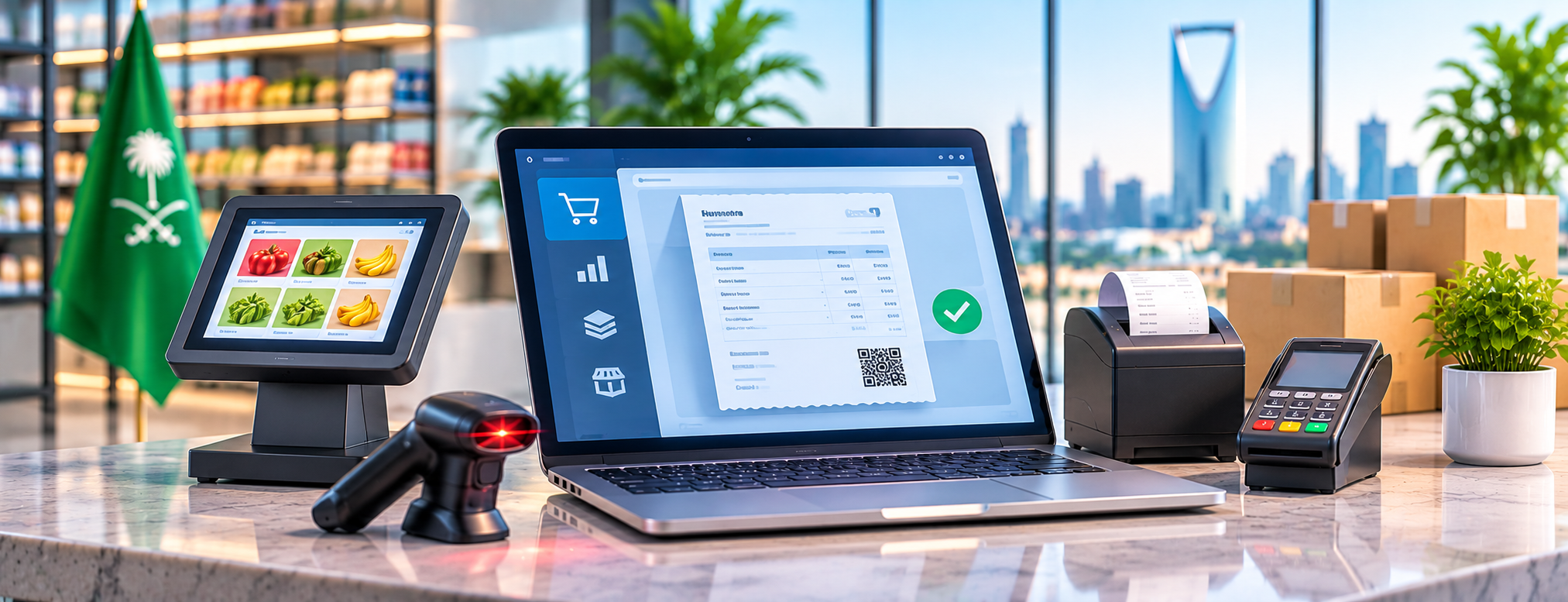
Many business owners in Saudi Arabia are looking for point-of-sale software that supports e-invoicing, helps organize sales, and reduces everyday errors. Choosing the right system, however, requires understanding the type of business, the number of devices and branches, product movement, and invoicing requirements. It is important to distinguish between simply issuing an invoice from a cash register and actually complying with the electronic invoicing requirements that apply to the business. This guide explains how to evaluate the options and which steps deserve testing before subscribing, with operational examples and practical questions to ask a solution provider.
There is no single answer that suits every store. One business may prioritize fast invoicing, while another may care more about accurate stocktaking or branch management. You must distinguish between what a system theoretically offers and what employees can actually perform. That is why we focus on criteria that can be verified rather than broad claims such as ‘the best’ or ‘approved’ without supporting evidence.
What Is an Electronic Invoice?
When assessing what an electronic invoice is in the context of electronic invoicing and compliance, start with what actually happens during day-to-day operations, not what appears in a marketing presentation. This area relates to the ability of point-of-sale software supporting e-invoicing to turn employees’ everyday tasks into clear, reviewable data. If a process is repeated dozens of times, even a small complication can waste time or cause discrepancies between records. It is therefore useful to document the current steps, identify where delays or errors occur, and compare them with how the proposed system works.
Consider a practical example: a store needs to test simplified invoices, returns, and credit notes. In this case, it is not enough for the provider to say that the system includes what an electronic invoice is; the team needs to run a test starting with data entry and ending with a review of the effect on the invoice, quantity, or relevant report. Ask the employee who will perform the process to test it personally, because ease of use cannot be measured by the number of buttons or the appearance of the screen alone. Record the result and your observations so you can compare multiple solutions without relying on your first impression.
If you want to evaluate the available options, you can explore plans and pricing, then confirm the available service details and how well they suit your business.
The Difference Between Simplified and Tax Invoices
When assessing the difference between simplified and tax invoices in the context of electronic invoicing and compliance, start with what actually happens during day-to-day operations, not what appears in a marketing presentation. This area relates to the ability of point-of-sale software supporting e-invoicing to turn employees’ everyday tasks into clear, reviewable data. If a process is repeated dozens of times, even a small complication can waste time or cause discrepancies between records. It is therefore useful to document the current steps, identify where delays or errors occur, and compare them with how the proposed system works.
Consider a practical example: a store needs to test simplified invoices, returns, and credit notes. In this case, it is not enough for the provider to say that the system includes the difference between simplified and tax invoices; the team needs to run a test starting with data entry and ending with a review of the effect on the invoice, quantity, or relevant report. Ask the employee who will perform the process to test it personally, because ease of use cannot be measured by the number of buttons or the appearance of the screen alone. Record the result and your observations so you can compare multiple solutions without relying on your first impression.
To explore options related to this topic, review accounting and point-of-sale solutions, then confirm the available service details and how well they suit your business.
The Issuance and Storage Phase
When assessing the issuance and storage phase in the context of electronic invoicing and compliance, start with what actually happens during day-to-day operations, not what appears in a marketing presentation. This area relates to the ability of point-of-sale software supporting e-invoicing to turn employees’ everyday tasks into clear, reviewable data. If a process is repeated dozens of times, even a small complication can waste time or cause discrepancies between records. It is therefore useful to document the current steps, identify where delays or errors occur, and compare them with how the proposed system works.
Consider a practical example: a store needs to test simplified invoices, returns, and credit notes. In this case, it is not enough for the provider to say that the system includes the issuance and storage phase; the team needs to run a test starting with data entry and ending with a review of the effect on the invoice, quantity, or relevant report. Ask the employee who will perform the process to test it personally, because ease of use cannot be measured by the number of buttons or the appearance of the screen alone. Record the result and your observations so you can compare multiple solutions without relying on your first impression.
The Integration and Connectivity Phase
When assessing the integration and connectivity phase in the context of electronic invoicing and compliance, start with what actually happens during day-to-day operations, not what appears in a marketing presentation. This area relates to the ability of point-of-sale software supporting e-invoicing to turn employees’ everyday tasks into clear, reviewable data. If a process is repeated dozens of times, even a small complication can waste time or cause discrepancies between records. It is therefore useful to document the current steps, identify where delays or errors occur, and compare them with how the proposed system works.
Consider a practical example: a store needs to test simplified invoices, returns, and credit notes. In this case, it is not enough for the provider to say that the system includes the integration and connectivity phase; the team needs to run a test starting with data entry and ending with a review of the effect on the invoice, quantity, or relevant report. Ask the employee who will perform the process to test it personally, because ease of use cannot be measured by the number of buttons or the appearance of the screen alone. Record the result and your observations so you can compare multiple solutions without relying on your first impression.
If you want to evaluate the available options, you can book a demonstration tailored to your business, then confirm the available service details and how well they suit your business.
Mandatory Information on an Invoice
When assessing mandatory invoice information in the context of electronic invoicing and compliance, start with what actually happens during day-to-day operations, not what appears in a marketing presentation. This area relates to the ability of point-of-sale software supporting e-invoicing to turn employees’ everyday tasks into clear, reviewable data. If a process is repeated dozens of times, even a small complication can waste time or cause discrepancies between records. It is therefore useful to document the current steps, identify where delays or errors occur, and compare them with how the proposed system works.
Consider a practical example: a store needs to test simplified invoices, returns, and credit notes. In this case, it is not enough for the provider to say that the system includes mandatory invoice information; the team needs to run a test starting with data entry and ending with a review of the effect on the invoice, quantity, or relevant report. Ask the employee who will perform the process to test it personally, because ease of use cannot be measured by the number of buttons or the appearance of the screen alone. Record the result and your observations so you can compare multiple solutions without relying on your first impression.
From a management perspective, ask who has permission to change data, whether previous transactions can be retrieved, and how errors are corrected after a shift is closed or a document is approved. You should also find out whether this function is included in the basic plan or requires separate configuration or an add-on. If the business has several branches, verify that information can be viewed both by branch and across the entire organization. Remember that the presence of a feature in the system does not necessarily mean it is enabled or suitable for your procedures without configuration.
To explore options related to this topic, review the purchasing management system, then confirm the available service details and how well they suit your business.
Credit and Debit Notes
When assessing credit and debit notes in the context of electronic invoicing and compliance, start with what actually happens during day-to-day operations, not what appears in a marketing presentation. This area relates to the ability of point-of-sale software supporting e-invoicing to turn employees’ everyday tasks into clear, reviewable data. If a process is repeated dozens of times, even a small complication can waste time or cause discrepancies between records. It is therefore useful to document the current steps, identify where delays or errors occur, and compare them with how the proposed system works.
Consider a practical example: a store needs to test simplified invoices, returns, and credit notes. In this case, it is not enough for the provider to say that the system includes credit and debit notes; the team needs to run a test starting with data entry and ending with a review of the effect on the invoice, quantity, or relevant report. Ask the employee who will perform the process to test it personally, because ease of use cannot be measured by the number of buttons or the appearance of the screen alone. Record the result and your observations so you can compare multiple solutions without relying on your first impression.
Barcodes and Invoice Requirements
When assessing barcodes and invoice requirements in the context of electronic invoicing and compliance, start with what actually happens during day-to-day operations, not what appears in a marketing presentation. This area relates to the ability of point-of-sale software supporting e-invoicing to turn employees’ everyday tasks into clear, reviewable data. If a process is repeated dozens of times, even a small complication can waste time or cause discrepancies between records. It is therefore useful to document the current steps, identify where delays or errors occur, and compare them with how the proposed system works.
Consider a practical example: a store needs to test simplified invoices, returns, and credit notes. In this case, it is not enough for the provider to say that the system includes barcodes and invoice requirements; the team needs to run a test starting with data entry and ending with a review of the effect on the invoice, quantity, or relevant report. Ask the employee who will perform the process to test it personally, because ease of use cannot be measured by the number of buttons or the appearance of the screen alone. Record the result and your observations so you can compare multiple solutions without relying on your first impression.
From a management perspective, ask who has permission to change data, whether previous transactions can be retrieved, and how errors are corrected after a shift is closed or a document is approved. You should also find out whether this function is included in the basic plan or requires separate configuration or an add-on. If the business has several branches, verify that information can be viewed both by branch and across the entire organization. Remember that the presence of a feature in the system does not necessarily mean it is enabled or suitable for your procedures without configuration.
If you want to evaluate the available options, you can review subscription options, then confirm the available service details and how well they suit your business.
Record Retention and Retrieval
When assessing record retention and retrieval in the context of electronic invoicing and compliance, start with what actually happens during day-to-day operations, not what appears in a marketing presentation. This area relates to the ability of point-of-sale software supporting e-invoicing to turn employees’ everyday tasks into clear, reviewable data. If a process is repeated dozens of times, even a small complication can waste time or cause discrepancies between records. It is therefore useful to document the current steps, identify where delays or errors occur, and compare them with how the proposed system works.
Consider a practical example: a store needs to test simplified invoices, returns, and credit notes. In this case, it is not enough for the provider to say that the system includes record retention and retrieval; the team needs to run a test starting with data entry and ending with a review of the effect on the invoice, quantity, or relevant report. Ask the employee who will perform the process to test it personally, because ease of use cannot be measured by the number of buttons or the appearance of the screen alone. Record the result and your observations so you can compare multiple solutions without relying on your first impression.
To explore options related to this topic, review accounting and point-of-sale solutions, then confirm the available service details and how well they suit your business.
System Updates and Support
When assessing system updates and support in the context of electronic invoicing and compliance, start with what actually happens during day-to-day operations, not what appears in a marketing presentation. This area relates to the ability of point-of-sale software supporting e-invoicing to turn employees’ everyday tasks into clear, reviewable data. If a process is repeated dozens of times, even a small complication can waste time or cause discrepancies between records. It is therefore useful to document the current steps, identify where delays or errors occur, and compare them with how the proposed system works.
Consider a practical example: a store needs to test simplified invoices, returns, and credit notes. In this case, it is not enough for the provider to say that the system includes system updates and support; the team needs to run a test starting with data entry and ending with a review of the effect on the invoice, quantity, or relevant report. Ask the employee who will perform the process to test it personally, because ease of use cannot be measured by the number of buttons or the appearance of the screen alone. Record the result and your observations so you can compare multiple solutions without relying on your first impression.
From a management perspective, ask who has permission to change data, whether previous transactions can be retrieved, and how errors are corrected after a shift is closed or a document is approved. You should also find out whether this function is included in the basic plan or requires separate configuration or an add-on. If the business has several branches, verify that information can be viewed both by branch and across the entire organization. Remember that the presence of a feature in the system does not necessarily mean it is enabled or suitable for your procedures without configuration.
Testing a Real Invoice
When assessing testing a real invoice in the context of electronic invoicing and compliance, start with what actually happens during day-to-day operations, not what appears in a marketing presentation. This area relates to the ability of point-of-sale software supporting e-invoicing to turn employees’ everyday tasks into clear, reviewable data. If a process is repeated dozens of times, even a small complication can waste time or cause discrepancies between records. It is therefore useful to document the current steps, identify where delays or errors occur, and compare them with how the proposed system works.
Consider a practical example: a store needs to test simplified invoices, returns, and credit notes. In this case, it is not enough for the provider to say that the system includes testing a real invoice; the team needs to run a test starting with data entry and ending with a review of the effect on the invoice, quantity, or relevant report. Ask the employee who will perform the process to test it personally, because ease of use cannot be measured by the number of buttons or the appearance of the screen alone. Record the result and your observations so you can compare multiple solutions without relying on your first impression.
If you want to evaluate the available options, you can discuss your requirements in a practical demonstration, then confirm the available service details and how well they suit your business.
Reviewing Claims of Official Approval
When assessing claims of official approval in the context of electronic invoicing and compliance, start with what actually happens during day-to-day operations, not what appears in a marketing presentation. This area relates to the ability of point-of-sale software supporting e-invoicing to turn employees’ everyday tasks into clear, reviewable data. If a process is repeated dozens of times, even a small complication can waste time or cause discrepancies between records. It is therefore useful to document the current steps, identify where delays or errors occur, and compare them with how the proposed system works.
Consider a practical example: a store needs to test simplified invoices, returns, and credit notes. In this case, it is not enough for the provider to say that the system includes claims of official approval; the team needs to run a test starting with data entry and ending with a review of the effect on the invoice, quantity, or relevant report. Ask the employee who will perform the process to test it personally, because ease of use cannot be measured by the number of buttons or the appearance of the screen alone. Record the result and your observations so you can compare multiple solutions without relying on your first impression.
From a management perspective, ask who has permission to change data, whether previous transactions can be retrieved, and how errors are corrected after a shift is closed or a document is approved. You should also find out whether this function is included in the basic plan or requires separate configuration or an add-on. If the business has several branches, verify that information can be viewed both by branch and across the entire organization. Remember that the presence of a feature in the system does not necessarily mean it is enabled or suitable for your procedures without configuration.
To explore options related to this topic, review distribution solutions, then confirm the available service details and how well they suit your business.
Responsibilities of the Business and the Provider
When assessing the responsibilities of the business and the provider in the context of electronic invoicing and compliance, start with what actually happens during day-to-day operations, not what appears in a marketing presentation. This area relates to the ability of point-of-sale software supporting e-invoicing to turn employees’ everyday tasks into clear, reviewable data. If a process is repeated dozens of times, even a small complication can waste time or cause discrepancies between records. It is therefore useful to document the current steps, identify where delays or errors occur, and compare them with how the proposed system works.
Consider a practical example: a store needs to test simplified invoices, returns, and credit notes. In this case, it is not enough for the provider to say that the system includes the responsibilities of the business and the provider; the team needs to run a test starting with data entry and ending with a review of the effect on the invoice, quantity, or relevant report. Ask the employee who will perform the process to test it personally, because ease of use cannot be measured by the number of buttons or the appearance of the screen alone. Record the result and your observations so you can compare multiple solutions without relying on your first impression.
A Practical Checklist Before Approving the System
• Define your objective for point-of-sale software supporting e-invoicing in one measurable sentence, such as reducing the time needed to record a sale or improving the accuracy of inventory reports.
• Count the POS terminals, devices, users, and branches, and anticipate expansion over the coming year rather than considering only the current situation.
• Run at least five test transactions: a normal sale, a discount, a return, a change of payment method, and an end-of-shift report.
• Ask about data export, backups, the change log, and technical-support response times. Request written answers when signing a contract.
• Review the total operating cost, including hardware, training, integration, subscriptions, and add-ons. Do not compare advertised prices alone.
How Can You Benefit from Nezami’s Service Pages?
Nezami provides informational pages for a range of software solutions. Use these pages as a starting point for understanding the scope of the services, then ask directly about any essential feature before deciding to buy. It would be inaccurate to assume that every function mentioned in this guide is automatically available in every plan or for every type of business.
To explore options related to this topic, review accounting and point-of-sale solutions, then confirm the available service details and how well they suit your business.
To explore options related to this topic, review the purchasing management system, then confirm the available service details and how well they suit your business.
To explore options related to this topic, review distribution solutions, then confirm the available service details and how well they suit your business.
To explore options related to this topic, review accounting and point-of-sale solutions, then confirm the available service details and how well they suit your business.
To explore options related to this topic, review the purchasing management system, then confirm the available service details and how well they suit your business.
To explore options related to this topic, review accounting and point-of-sale solutions, then confirm the available service details and how well they suit your business.
Ready to Try the System?
Start your free trial or speak with the sales team for help choosing the right solution.
Frequently Asked Questions
How do I choose point-of-sale software supporting e-invoicing for my business?
Start with the most frequent operations, identify the essential requirements, then test invoices, returns, reports, and integrations before subscribing.
Does the system need a permanent internet connection?
That depends on how the system is designed. Ask which functions work offline and how synchronization takes place when connectivity returns; do not assume offline support is included.
Is a cash register system enough to manage accounting?
Not always. A business may need a fully integrated accounting system or an appropriate connection to post transactions, reconcile payments, and review accounts.
How can I verify the electronic invoicing requirements?
Consult the Zakat, Tax and Customs Authority (ZATCA) to verify which requirements apply to your business, and ask the provider to specify the scope of compliance supported by its system.
What is the most important step before signing a contract?
Test real sales scenarios with your employees, review the total cost, support, and scalability, and document your observations before making a choice.
Conclusion
A sound decision about point-of-sale software supporting e-invoicing starts with the business’s needs, not a feature list. Focus on testing actual procedures, reviewing integration with accounting and inventory, and checking user permissions, reports, costs, and support. Where regulatory requirements apply, rely on up-to-date official information before publishing or going live. The goal is to build an organized sales process that can be monitored and improved as the business grows.
Once your requirements are clear, you can start registering with Nezami, then confirm the available service details and how well they suit your business.
SEO Details and Editorial Review
SEO Title: Point-of-Sale Software Supporting E-Invoicing in Saudi Arabia
Meta Description: A practical guide to point-of-sale software supporting e-invoicing in Saudi Arabia: features, selection criteria, common mistakes, and steps for testing the system before subscribing.
Primary Keyword: POS software supporting e-invoicing
Secondary Keywords: e-invoicing cash register, tax-compliant point of sale, POS systems and e-invoicing, cash register software compatible with ZATCA requirements, tax invoices from a cash register
URL Slug: pos-guide-06
Alt Text: POS software supporting e-invoicing in a Saudi retail business, with a sales screen and cash register devices
Official E-Invoicing Source: https://zatca.gov.sa/
Note: Check for overlapping search intent with articles already published on the website before creating a new URL, and review service pages and regulatory details before publication.
Automatically Calculated Body Word Count (including link text and procedural phrases): 2934
Start Managing Your Business with Complete Flexibility
Try Aamal Digital for free. Start issuing electronic invoices that comply with ZATCA requirements in minutes.